
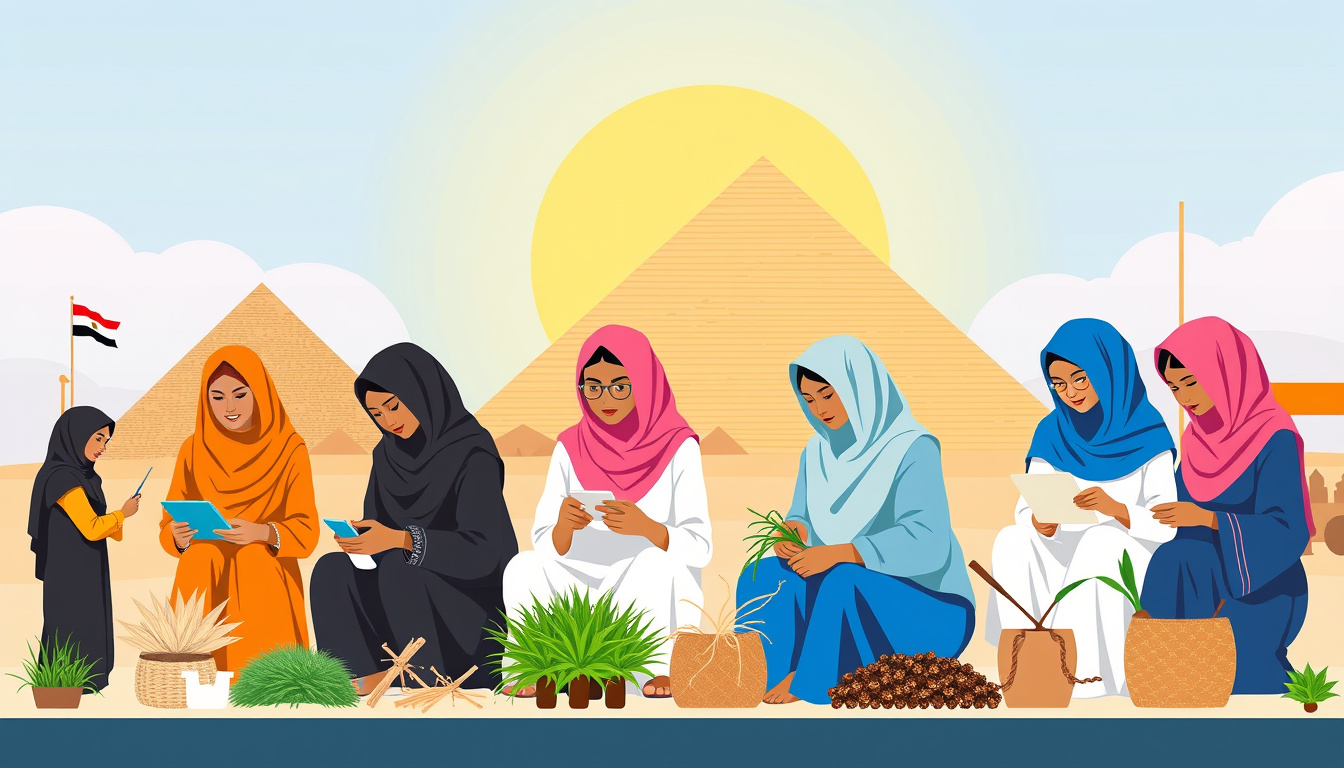
Empowering Egyptian Women Entrepreneurs: Closing the Gender Gap for Economic Growth by 2025
In recent years, Egypt has witnessed a gradual rise in female entrepreneurship, with nearly 38% of Egyptian women identifying as entrepreneurs by
2025.
However, this noteworthy statistic is juxtaposed with the stark reality of a mere 18% participation rate of women in the formal labor force.
This discrepancy not only speaks to the systemic barriers that persist but also underscores a pressing economic challenge that, if addressed, could unlock significant growth potential for the nation.
Economists estimate that bridging this gender gap could lead to an impressive 56% increase in Egypt’s GDP, illustrating the tremendous economic value of integrating women into the workforce.
As households benefit from enhanced incomes and the economy thrives, the call for action to empower women entrepreneurs has never been more critical.
Key organizations such as Entreprenelle, Business Women of Egypt 21 (BWE21), and the Women Entrepreneurs Network (WEN) are at the forefront of this crucial movement.
These platforms not only support women in their entrepreneurial pursuits but also foster a thriving ecosystem that cultivates talent and innovation.
In this article, we will delve into the current state of women entrepreneurship in Egypt and explore effective strategies to empower women, ultimately contributing to a more equitable and prosperous economic landscape for all.

Key Takeaways
- 38% of Egyptian women are entrepreneurs, yet only 18% participate in the formal labor force.
- Closing the gender gap in workforce participation could boost Egypt’s GDP by 56%.
- Organizations like Entreprenelle and BWE21 are crucial in supporting women-led businesses in Egypt.
The Current State of Women Entrepreneurship in Egypt
The current state of women entrepreneurship in Egypt is a promising yet paradoxical scenario, where as of 2025, approximately 38% of Egyptian women identify as entrepreneurs, but their engagement in the formal labor force remains worryingly low at around 18%.
This stark contrast underscores the systemic barriers that continue to inhibit women’s access to formal employment and the broader financial ecosystem.
Economists suggest that addressing this disparity could lead to a remarkable 56% increase in Egypt’s GDP, signaling a vast, untapped productive capacity within the nation.
Integrating more women into the workforce is not merely a social imperative; it is a strategic economic move that could significantly enhance household incomes and boost the overall competitiveness of the Egyptian economy.
Numerous platforms are leading the charge in supporting women entrepreneurs, including Entreprenelle, the Business Women of Egypt 21 (BWE21), and the Women Entrepreneurs Network (WEN).
Notably, BWE21, which has been operational since 1998, has cultivated a robust ecosystem for women-led businesses, encompassing over 450 member companies across diverse sectors such as manufacturing and services.
These organizations are pivotal in transforming the entrepreneurial ambitions of women into substantial economic contributions, driving not only financial independence but also paving the way for future generations of women entrepreneurs in Egypt.
Strategies for Empowering Women Through Entrepreneurship
To further empower women through entrepreneurship in Egypt, strategic initiatives are essential.
One effective approach is fostering networking opportunities among women entrepreneurs.
Events and workshops where women can share experiences, challenges, and successes can create a supportive community, fostering collaboration and mentorship.
Additionally, providing access to finance is crucial; organizations can develop microfinance programs specifically tailored for women entrepreneurs, which would enable them to secure the necessary capital to launch and scale their businesses.
Furthermore, increasing visibility through marketing and showcasing successful women entrepreneurs can inspire others and reshape societal perceptions surrounding women’s roles in business.
Educational programs that emphasize entrepreneurial skills, financial literacy, and digital marketing can also equip women with the tools they need for success.
These strategies combined can significantly reduce the barriers women face, enhance their engagement in the economic landscape, and ultimately contribute to a more robust national economy.