
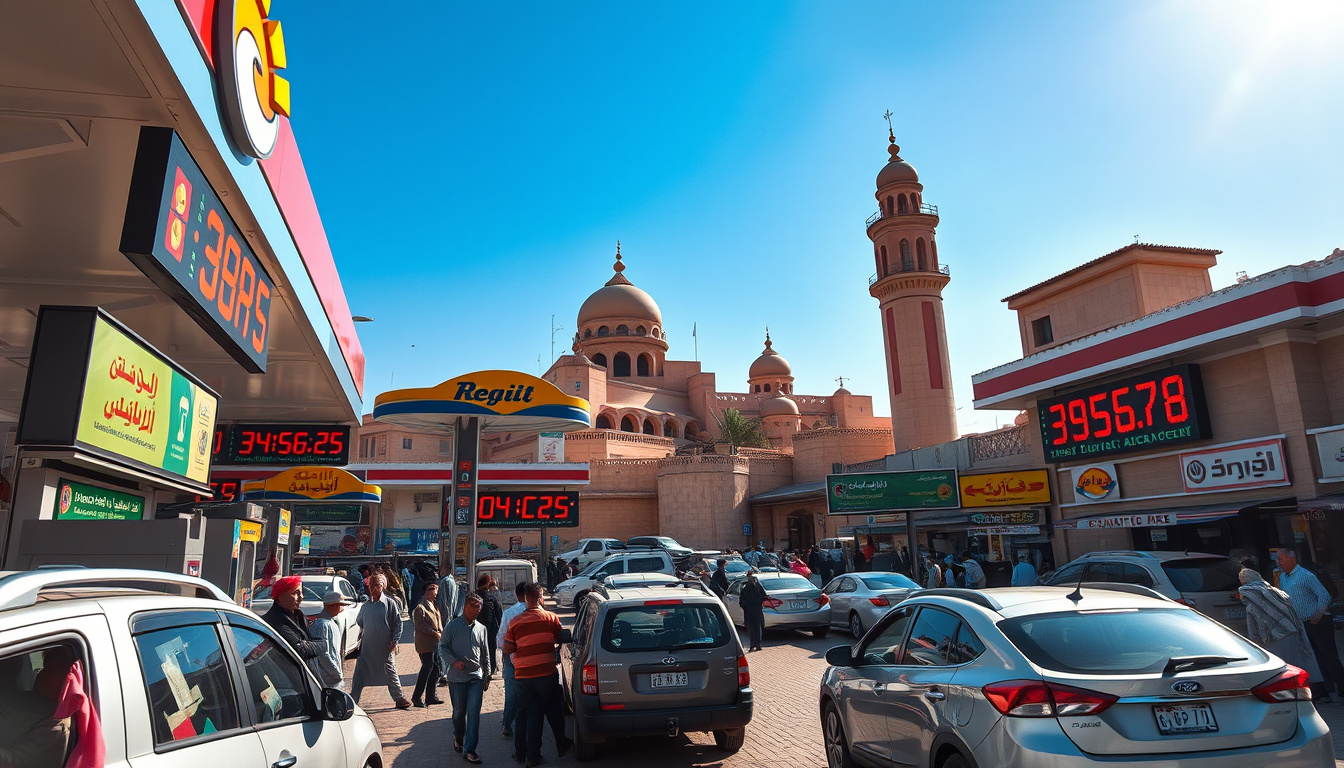
On March 10, 2026, Egypt implemented a significant increase in fuel prices, raising costs by EGP 3 (approx.
USD
0.58) per liter across various fuel categories.
This move has prompted widespread discussion about the implications on both the economy and daily life for Egyptian citizens.
Understanding the nuances behind this decision, the new price structure, and the broader economic context is vital for those closely following Egypt’s energy market and fiscal policies.
In this article, we will delve into the details of the new fuel pricing, the contributing global economic factors, and how these changes fit into Egypt’s ongoing economic reforms.

Key Takeaways
- Egypt increased fuel prices by EGP 3 per liter in March 2026 due to global energy cost rises.
- The government’s strategy includes reducing fuel subsidies while boosting domestic energy production and investments.
- The ongoing devaluation of the Egyptian pound exacerbates the costs of energy imports and affects pricing structures.
Overview of the Fuel Price Increases in March 2026
In March 2026, Egypt witnessed a significant increase in fuel prices, a move that has sparked discussions across the country regarding its implications on the economy and daily life.
On March 10, the Egyptian government implemented a hike of EGP 3 (approximately USD
0.58) per liter across various fuel categories, starting from 3:00 a.m.
This change means that 95-octane gasoline is now priced at EGP 24 (USD
0.46) per liter, while 92-octane and 80-octane follow at EGP
22.25 (USD
0.43) and EGP
20.75 (USD
0.40), respectively.
Diesel, vital for transportation and industries, has seen a new price of EGP
20.5 (USD
0.39) per liter.
Furthermore, the cost for natural gas used in vehicles has reached EGP 13 (USD
0.25) per cubic meter, and the price for household butane cylinders has skyrocketed, with a
12.5-kilogram cylinder costing EGP 275 (USD
5.29) and a 25-kilogram cylinder priced at EGP 550 (USD
10.58).
The Egyptian Ministry of Petroleum has attributed this increase to the surge in global energy prices influenced by ongoing geopolitical tensions, which have strained the costs associated with imports, production, and shipping.
In response to these challenges, the government is focusing on enhancing domestic oil and gas production while encouraging investment in exploration to reduce dependence on foreign imports.
Over recent years, Egypt has been systematically phasing out fuel subsidies as part of broader economic reforms linked to its commitments with the International Monetary Fund (IMF).
This includes not only adjustments to energy prices but also the expansion of social protection initiatives aimed at cushioning the impact on the most vulnerable populations.
The ongoing devaluation of the Egyptian pound, which has now surpassed EGP 52 against the US dollar, is compounding these issues by inflating the cost of energy imports.
Impact of Global Economic Factors on Egypt’s Energy Prices
The recent fuel price increase in Egypt has significant ramifications for both the local economy and consumers.
As the cost of fuel rises, the effects are felt across various sectors, driving up transportation and production expenses, which can ultimately lead to increased prices for goods and services throughout the country.
This situation places additional strain on consumers already grappling with economic hardship, pushing many to reconsider their daily transportation and energy consumption habits.
Many experts argue that Egypt’s efforts to enhance domestic energy production could help stabilize prices in the long run, but the immediate challenges posed by global economic factors and inflation will require careful navigation and strategic planning from both government officials and industry leaders.
Furthermore, the ongoing adjustments triggered by the IMF-linked reforms reflect a broader shift in Egypt’s energy policy as it seeks to balance economic sustainability with social welfare.