
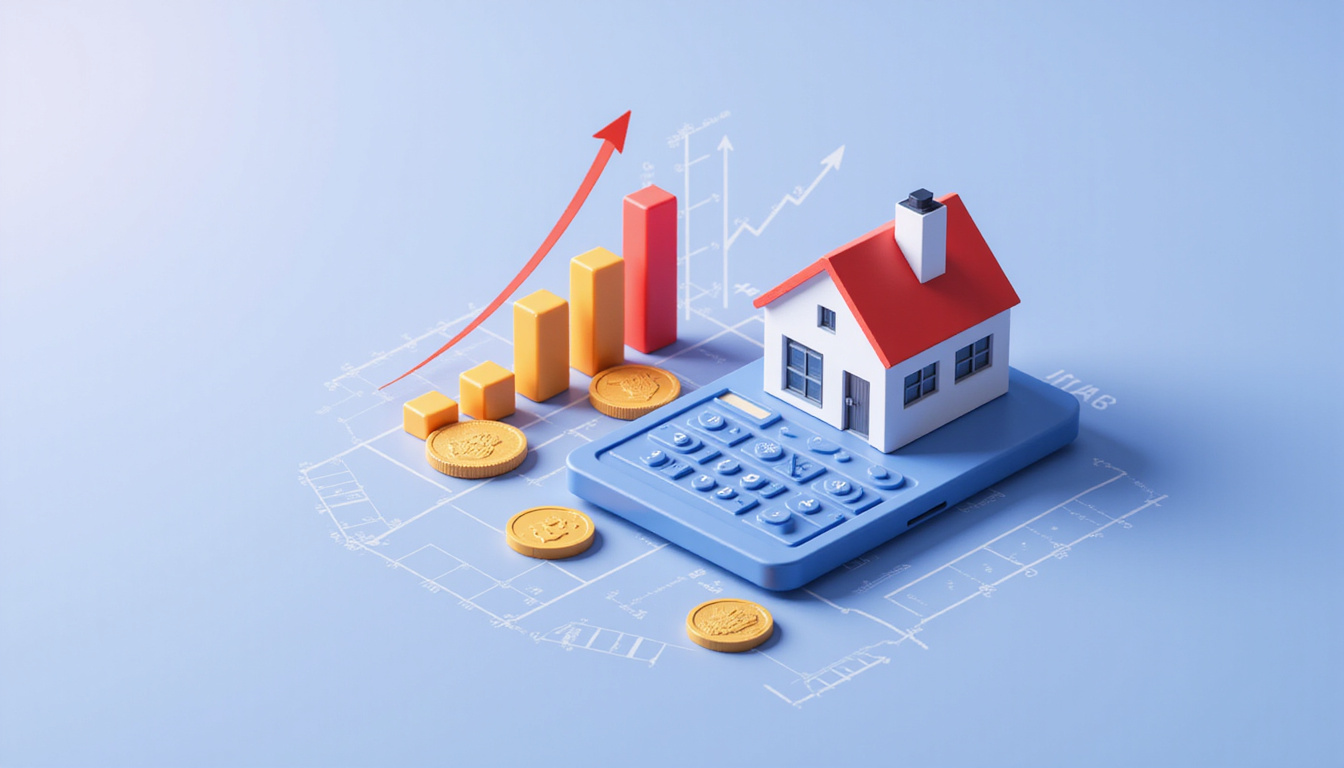
Understanding a cap rate helps you check rental property profit fast. A cap rate shows income and price links in one number. In this guide you will learn what a cap rate is, how to use a cap rate calculator, and ways to boost rental profit.
What is a cap rate and why it matters
A cap rate is the ratio that links a property’s net income and its market value or purchase price. In plain words, it shows the yearly return an investor gains from the property before costs like loans or taxes. For a standard meaning, see Investopedia’s explanation of capitalization rate (source).
How the cap rate formula works
cap rate = Net Operating Income (NOI) ÷ Property Value (or Purchase Price)
• NOI = Gross rental income minus operating costs (such as management, insurance, maintenance, property taxes, vacancy cost, and utilities paid by the owner)
• Property Value = Current market value or agreed purchase price
A simple example:
• Annual rent: $36,000
• Operating costs (including vacancy): $9,000
• NOI = $27,000
• Purchase price: $450,000
• cap rate = $27,000 ÷ $450,000 = 0.06, which is 6%
Step-by-step: Using a cap rate calculator
Follow these steps to use a cap rate calculator and compare properties fairly:
Get correct income numbers
• Use current lease details, market rent checks, and include vacancy. Do not overstate rent.Compute gross potential rent
• Multiply monthly rents by 12 for yearly totals. Add other income like parking or pet fees.Subtract operating costs to find NOI
• Include property taxes, insurance, maintenance, management fees, utilities you pay, and a vacancy cost. Do not include mortgage payments because cap rate comes before financing.Enter the purchase price or value
• Use the contract price for buys or a trusted market value for comparisons.Divide NOI by price to get the cap rate
• Then compare your result to local market numbers.Think about risk and strategy
• A higher cap rate may mean higher risk or a less popular area; a lower rate may mean a prime area or lower change in costs.
Quick checklist for the cap rate calculator
• Annual rent (current and expected)
• Other income items
• Vacancy percentage
• Property taxes and insurance
• Maintenance and repairs
• Management fees
• Utilities paid by the owner
• Purchase price or market value
Interpreting cap rate results
• Low cap rate (e.g. 2–4%): Seen in busy urban spots or stable areas where price gains and low risk are likely.
• Mid cap rate (e.g. 5–7%): Common for many suburban rentals with balanced risk and return.
• High cap rate (e.g. 8%+): May point to value add chances, growing areas, or higher operating risk.
Cap rate versus other return measures
Cap rate is a quick tool for comparisons. Other measures include:
• Cash-on-cash return (which shows effects of financing)
• Internal Rate of Return (IRR) for multi-year returns
• Gross Rent Multiplier (GRM) for a rapid check
Pros and cons of cap rate
Pros:
• Fast and simple to work out
• Good for comparing similar properties in a market
• Removes loan details so you can focus on property income
Cons:
• It is a momentary view that does not show cash flow after loans or tax effects
• Different methods in figuring NOI can affect fair comparisons
• It does not show future rent gains, repair needs, or local trends
Ways to boost cap rate and rental profit
To raise your cap rate, you can work on increasing NOI or lowering the price you pay. Here are proven steps:
Raise rental income
• Adjust rents to match local levels when leases end
• Add extra income like coin laundry, storage, or parking fees
• Rent out furnished units at a higher price if demand is goodCut operating costs
• Check regular services (landscaping, insurance, pest control) and ask for better rates
• Consider energy-saving fixes to lower utility bills
• Improve tenant screening to lower turnover and eviction costsAdd value with simple upgrades
• Make small, cost-effective improvements (new kitchen hardware, a fresh coat of paint, small bathroom fixes) that allow you to ask higher rents
• If rules allow, add new legal rental units or change unused space into rent spaceImprove tenant occupancy and quality
• Use clear marketing when space is empty
• Give incentives for long leases to lower turnover
• Invest in good property management to keep tenants happyBuy with care
• Use market checks to buy below replacement cost or in areas with steady demand
• Look for deals where negotiation can improve the effective cap rateRefine financing options
• When you boost NOI, you may refinance at a higher value to lower loan costs or get cash for new buys
Example: Changing a 5% to a 7% cap rate
• Purchase price: $400,000; NOI = $20,000 gives a 5% cap rate
• After raising rents and adding parking income, NOI grows by $5,000 per year
• If you trim costs by $2,000 per year, new NOI becomes $27,000
• New cap rate = $27,000 ÷ $400,000 = 6.75% (about 6.8%)
Small, focused steps can change the returns.

Checklist: What to add in your cap rate calculator
• Yearly gross rent
• Other income streams
• Vacancy amount (percentage or dollars)
• All operating costs (detailed)
• Purchase price or current property value
• Any planned improvements (for expected cap rate)
Using a cap rate calculator well
When you use an online cap rate tool, keep your figures realistic. Many investors pick high rent or forget repair and upkeep costs. For more technical details on the capitalization rate, see Investopedia’s guide (source).
Bonus: Travel links for extra ideas
Below are search links for Egypt travel topics. They help if you own short-term rentals or vacation options.
• Egypt tours (YouTube search): https://www.youtube.com/results?search_query=Egypt+tours
• Nile cruise (YouTube search): https://www.youtube.com/results?search_query=Nile+cruise
• Hurghada trips (YouTube search): https://www.youtube.com/results?search_query=Hurghada+excursions
• Cairo day trips (YouTube search): https://www.youtube.com/results?search_query=Cairo+day+trips
These links show videos on travel plans and guest tips. They help you market vacation homes or tell guests about local fun.
FAQ — Cap Rate Questions
Q1: What is a good cap rate for rental property?
A1: What feels good depends on the place and risk you take. Many stable urban areas show 4–6%, while riskier or value add areas may show 7–10%. Check local numbers to compare.
Q2: How do I work out cap rate fast without a calculator?
A2: Roughly subtract operating costs from yearly rent to get NOI. Then divide NOI by the purchase price. For example, if NOI is $15,000 and the price is $250,000, the cap rate is 6%.
Q3: Should I use cap rate or cash-on-cash return?
A3: Use both. Cap rate is best for property checks without loan details. Cash-on-cash return shows cash returns after loan costs. Both together give a full view.
Conclusion and next steps
A cap rate calculator is a useful tool for checking, comparing, and planning rental investments. When you use solid figures and combine cap rate with other measures (like cash-on-cash or IRR), you can make faster and smarter decisions. Start with real scenarios: work out your current cap rate, see how rent raises or lower costs change NOI, and check how that affects value and loan choices.
Ready to work on your portfolio? Use a trusted cap rate tool with honest figures, compare your target cap rate to local checks, and pick investments that can really boost NOI. If you want, share your income and cost numbers. I can then build a sample plan and suggest steps to raise your cap rate.
[center]
[/center]