
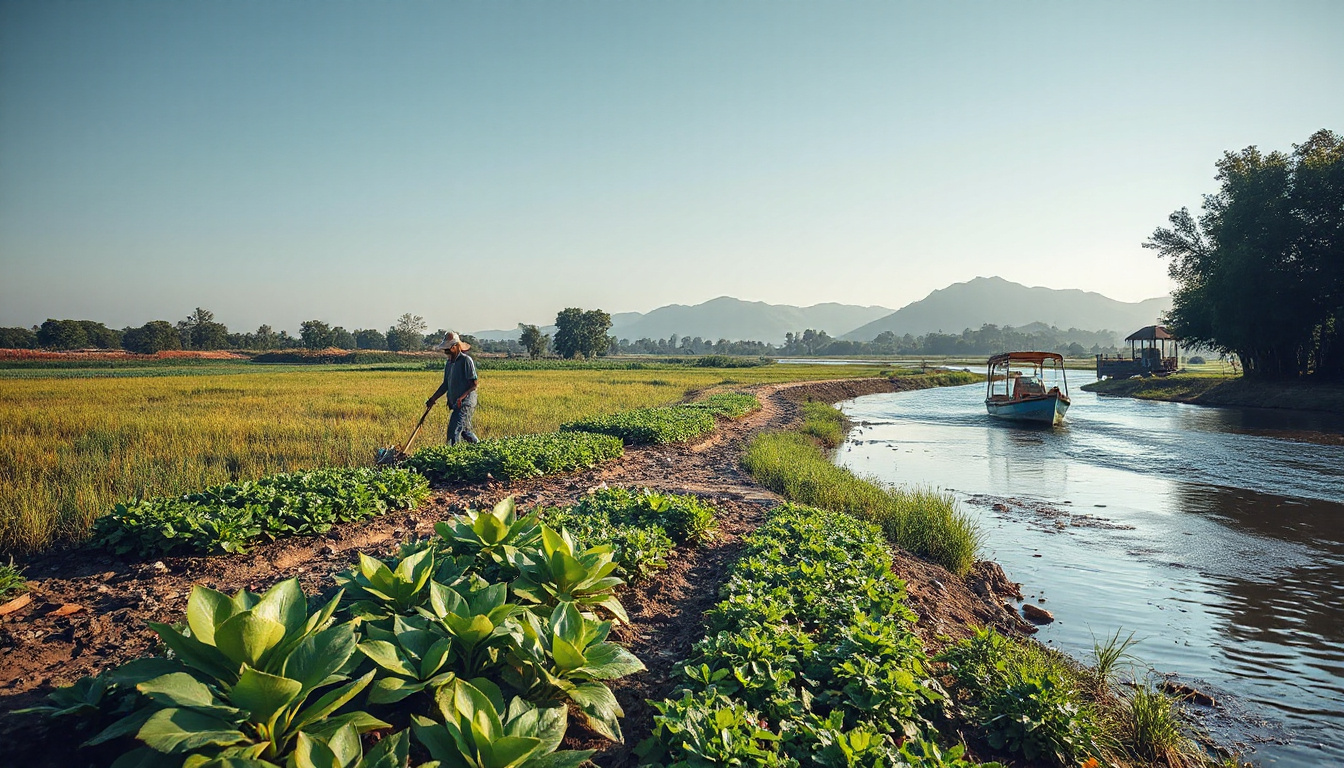
The Nile River, often referred to as the lifeblood of Egypt and Sudan, has been a crucial resource for agriculture since ancient times.
Spanning over 6,650 kilometers, it offers fertile lands along its banks, making it one of the world’s most significant agricultural regions.
In this blog post, we will explore the innovative techniques that are transforming agriculture along the Nile, delve into sustainable farming practices that are being adopted, examine the impact of climate change and water management on Nile-based agriculture, and consider future perspectives that promise to enhance food security.
Join us as we discover how harnessing the power of agriculture along the Nile can create a sustainable and prosperous future for generations to come.

Key Takeaways
- Agriculture along the Nile has a rich history that emphasizes the importance of water management.
- Innovative techniques such as drip irrigation and crop rotation are transforming Nile-based agriculture.
- Sustainable farming practices are crucial for preserving the Nile’s ecosystem and ensuring food security.
- Climate impacts significantly affect water availability, making management strategies essential for successful farming.
- The future of Nile-based agriculture relies on continuous innovation and adaptation to environmental challenges.
Introduction to Agriculture Along the Nile
## Introduction to Agriculture Along the Nile
Agriculture along the Nile River is a cornerstone of both the economy and culture of the region, directly influencing the livelihoods of millions.
This fertile landscape, nourished by the river’s annual floods, has fostered diverse agricultural practices for centuries.
As one of the longest rivers in the world, the Nile not only provides essential water resources but also contributes to rich, nutrient-dense soil.
In this blog post, we will explore the significance of agriculture in Nile-based communities, examine the crops that thrive in this unique environment, and discuss the challenges faced by farmers in this region.
Innovative Techniques in Nile Agriculture
## Innovative Techniques in Nile Agriculture
As the lifeblood of Egypt, the Nile River plays a pivotal role in shaping the landscape of agriculture in this region.
The agriculture Nile-based techniques are continually evolving, driven by technology and sustainable practices.
Modern farmers are embracing innovative methods to enhance productivity while conserving water and protecting the environment.
### Precision Farming
One of the most impactful innovations in agriculture Nile-based practices is precision farming.
This technique utilizes GPS, satellite imagery, and IoT devices to gather data on soil health, moisture levels, and crop health.
By analyzing this data, farmers can make informed decisions about irrigation, fertilization, and pest control.
The result is not only increased crop yields but also a significant reduction in resource wastage.
### Hydroponics and Aquaponics
Hydroponics, the method of growing plants without soil, is gaining momentum in Nile agriculture.
This technique allows for farming in urban areas and places where soil condition is poor or contaminated.
Aquaponics, which combines aquaculture (raising fish) with hydroponics, is also making waves.
These systems use the waste produced by fish to nourish plants, creating a symbiotic environment that maximizes growth while minimizing resource usage.
This innovative agriculture Nile-based method is particularly important as it uses less water than traditional farming methods.
### Sustainable Irrigation Systems
With water scarcity being a pressing issue in Egypt, adopting sustainable irrigation systems is crucial for agriculture Nile-based practices.
Technologies such as drip irrigation and rainwater harvesting systems are helping farmers to maximize their water use efficiency.
Drip irrigation delivers water directly to the plant roots, reducing evaporation and runoff, while rainwater harvesting captures and stores rain for future irrigation needs.
### Organic Farming Practices
There is a growing trend towards organic farming in Nile agriculture.
By avoiding synthetic fertilizers and pesticides, farmers are creating healthier ecosystems and producing better-quality crops.
Techniques such as crop rotation, cover cropping, and composting enrich the soil and significantly enhance biodiversity.
The shift towards organic methods is not just improving the health of consumers but also paving the way for sustainable agriculture practices in the region.
### Conclusion
Innovative techniques in agriculture Nile-based strategies are turning challenges into opportunities.
The adoption of precision farming, hydroponics, sustainable irrigation, and organic methods is transforming how farmers grow crops and manage resources.
As technology advances and awareness of environmental issues increases, the future of Nile agriculture looks promising.
For those interested in this subject, engaging with local agricultural communities or exploring modern farming techniques can provide invaluable insights into the evolving landscape of Nile-based agriculture.
‘The future of agriculture is not in the land, but in the ability to harness innovation and sustainability to meet the needs of our growing population.’ – Unknown

Sustainable Farming Practices in the Nile Region
## Sustainable Farming Practices in the Nile Region
The Nile region, often dubbed the lifeblood of Egypt and Sudan, has been pivotal in shaping agriculture practices for centuries.
With its unique ecosystems and a rich history in sustainable techniques, agriculture in the Nile-based areas offers invaluable lessons for modern farming.
As we delve into sustainable farming practices in this region, it’s essential to understand how traditional wisdom and innovative strategies are being harmonized to enhance productivity while preserving the environment.
### Importance of Sustainable Agriculture in the Nile Region
Sustainable agriculture in the Nile-based territories is critical for several reasons:
• Resource Efficiency: The Nile provides water for irrigation, but its resources must be managed carefully to avoid depletion and pollution.
– Biodiversity Preservation: The region is home to various plant and animal species that are crucial for ecological balance.
– Economic Resilience: By adopting sustainable practices, local farmers can improve yields while reducing dependency on chemical fertilizers and pesticides, thereby fostering economic stability.
### Key Sustainable Practices in Agriculture Nile-Based
1.
Crop Rotation and Diversity
One of the most effective sustainable practices is crop rotation, which helps maintain soil health and enhances biodiversity.
Farmers in the Nile region often alternate between crops like wheat, barley, and legumes, allowing the soil to replenish its nutrients naturally.
2.
Organic Farming Techniques
Many farmers are turning to organic methods, relying on natural fertilizers such as compost and green manure to nourish their crops.
This not only reduces chemical runoff into the Nile but also promotes healthier produce.
3.
Water Conservation Methods
Given that the Nile is a finite resource, employing water-saving technologies such as drip irrigation is paramount.
This technique allows precise water application directly to the roots, significantly reducing waste.
4.
Agroforestry
Integrating trees into farmland supports biodiversity and provides shade, which can improve microclimate conditions for crops.
Farmers plant fruit trees alongside traditional crops, boosting both food security and income.
5.
Soil Conservation Practices
Techniques such as no-till farming and contour farming help to prevent soil erosion, a particular concern in Nile regions where flooding can cause significant loss of topsoil.
### Challenges to Sustainable Agriculture in the Nile Region
While the potential for sustainable agriculture in the Nile-based areas is immense, several challenges persist:
• Climate Change: Altered rainfall patterns and rising temperatures can severely affect crop yields.
– Population Pressure: Increasing populations put strain on available water and land resources, often leading to unsustainable practices.
– Market Access: Many farmers lack access to markets for locally produced sustainable goods, limiting their economic viability.
### Conclusion
Sustainable agriculture in the Nile region is not just a necessity but an opportunity to preserve both environmental integrity and cultural heritage.
With the implementation of various sustainable practices such as crop rotation, organic farming, and water conservation techniques, farmers can thrive even amidst challenges.
As awareness and interest in agriculture Nile-based practices grow, it invites a collaborative effort among communities, governments, and organizations to champion these methods.
Join the conversation on sustainable farming, share your experiences, and let’s cultivate a greener future for generations to come.
The Role of Climate and Water Management
# The Role of Climate and Water Management in Agriculture Nile-Based
Agriculture Nile-based heavily relies on the unique climatic conditions and water resources found along the Nile River.
This vital waterway supports millions of farmers in the region, making effective water management essential for agricultural productivity.
In this section, we’ll explore how climate affects agriculture along the Nile and the importance of sustainable water management practices.
## Climate Factors Influencing Agriculture Nile-Based
The climate along the Nile is characterized by a distinct dry season and a rainy season, which presents both challenges and opportunities for agriculture.
Here are some climate factors that significantly influence agriculture Nile-based:
• Temperature: The high temperatures during the dry season necessitate efficient irrigation practices.
Crops like wheat, maize, and cotton thrive under these conditions when proper water management techniques are applied.
– Rainfall Patterns: The reliance on seasonal rains means that farmers must adapt to varying rainfall patterns.
Adopting drought-resistant crops can mitigate the risks associated with unpredictable weather.
– Humidity Levels: Higher humidity can impact pest and disease prevalence, necessitating integrated pest management strategies to protect crops without compromising yields.
## Importance of Water Management in Agriculture Nile-Based
Water management plays a crucial role in enhancing agricultural productivity and sustainability along the Nile.
Effective strategies include:
• Irrigation Techniques: Advanced irrigation methods, such as drip and sprinkler systems, reduce water wastage and ensure that crops receive an adequate supply of water, especially during dry spells.
– Rainwater Harvesting: Capturing and storing rainwater can provide additional resources for farming during the dry season, promoting more stable crop yields.
– Soil Management Practices: Employing techniques such as mulching and cover cropping can improve soil structure and moisture retention, reducing the need for excessive irrigation.
### Case Studies: Successes in Sustainable Practices
Several initiatives in countries along the Nile have demonstrated successful adaptation of agricultural practices to climate and water management:
• Egypt: The introduction of soil moisture sensors has helped farmers in the Nile Delta optimize their irrigation schedules, resulting in increased yields and better water conservation.
– Sudan: Community-led rainwater harvesting projects have empowered farmers to enhance their productivity during the fluctuating rainy seasons, leading to improved food security.
## Conclusion
In summary, climate and water management are pivotal to the success of agriculture Nile-based.
As farmers adapt to the challenges posed by climate variability, the adoption of sustainable water management practices becomes imperative.
By investing in innovative techniques and technologies, agricultural producers can enhance their resilience to climate change and ensure the future sustainability of their crops.
Are you involved in Nile-based agriculture?
Share your experiences with water management and climate adaptation in the comments below!

Future Perspectives for Nile-based Agriculture
## Future Perspectives for Nile-based Agriculture
As the world’s population continues to grow, the need for sustainable food production becomes increasingly critical, particularly in regions heavily dependent on river systems like the Nile.
Agriculture Nile-based practices are vital for supporting not only the local economies but also the diverse ecosystems surrounding the Nile Basin.
### Innovations in Irrigation Techniques
One of the most promising future perspectives for Nile-based agriculture involves advancements in irrigation technology.
Efficient water management practices, such as drip irrigation and rainwater harvesting, can significantly reduce water wastage.
By integrating these technologies, farmers can maximize crop yield while minimizing water use, which is essential in a region facing climate variability.
### Sustainable Crop Diversification
Agriculture Nile-based systems are also moving towards diversification to enhance resilience against pests, diseases, and climate impacts.
Introducing a variety of crops, including drought-tolerant species, can reduce dependence on traditional staples.
Not only does this improve soil health, but it also elevates farmers’ income potential by catering to broader market demands.
### Enhancing Market Access
Increasing market accessibility for Nile-based agriculture products is crucial to supporting local farmers.
Developing better transport infrastructure, establishing farmer cooperatives, and leveraging online platforms can help small-scale farmers reach larger markets.
This facilitates better pricing for their goods and provides consumers with fresher produce.
### Embracing Climate-smart Practices
With climate change presenting a significant challenge, agriculture Nile-based communities are adopting climate-smart agricultural practices that bolster resilience and ensure sustainability.
This includes crop rotation, organic farming methods, and integration of agroforestry.
These practices aim to improve biodiversity and mitigate climate risks, ensuring that Nile-based agriculture can thrive well into the future.
### Conclusion
In summary, the future perspectives for Nile-based agriculture are bright, fueled by innovation and sustainability.
By embracing new technologies, diversifying crops, enhancing market access, and adapting to climate challenges, Nile-based agriculture can play a key role in food security for millions.
As stakeholders continue to invest in and explore these opportunities, it’s crucial for individuals and organizations alike to engage in supportive initiatives that foster growth in this vital sector.
Together, we can ensure that Nile-based agriculture remains a cornerstone of the region’s development.
Frequently Asked Questions
What innovative techniques are being used in agriculture along the Nile?
Innovative techniques in Nile agriculture include precision farming, integrated pest management, and the use of advanced irrigation systems that ensure efficient water use and minimize waste.
What sustainable practices are being implemented in the Nile region?
Sustainable practices include crop rotation, organic farming, agroforestry, and the conservation of water resources, which help to maintain soil health and reduce the environmental impact of farming.
How does climate affect agriculture along the Nile?
Climate significantly impacts agriculture along the Nile, with factors like rainfall patterns and temperature variations influencing crop yields and water availability for irrigation.
What role does water management play in Nile-based agriculture?
Effective water management is crucial for Nile-based agriculture, as it ensures the optimal use of available water sources, reduces the risk of flooding or drought, and helps achieve sustainability in farming practices.
What are the future perspectives for agriculture in the Nile region?
The future perspectives for agriculture in the Nile region involve increasing the adoption of technology, enhancing resilience to climate change, and fostering collaboration among stakeholders to promote sustainable agricultural development.