
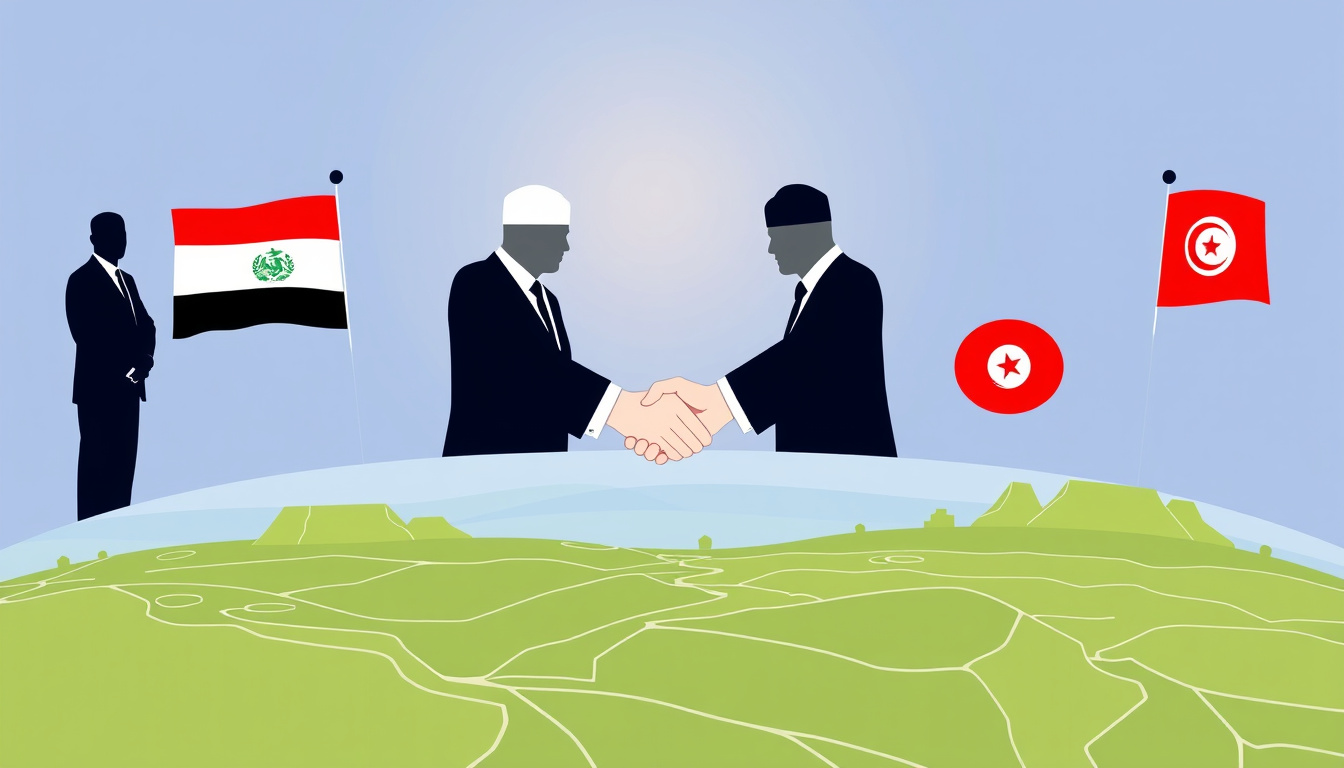
In an era marked by multifaceted regional challenges, Egypt and Tunisia are stepping up efforts to strengthen their cooperation and bolster ties that have historically united the two nations.
On January 27, 2026, Egyptian Foreign Minister Badr Abdelatty conveyed a direct message from President Abdel Fattah Al-Sisi to Tunisian President Kais Saied during a pivotal meeting at the Carthage Palace.
This encounter did not just reaffirm Egypt’s unwavering support for Tunisia; it also set the stage for a deeper collaboration across various sectors, crucial for navigating the evolving geopolitical landscape of North Africa.
Through enhancing economic partnerships and addressing pressing regional issues, both countries aim to foster a robust relationship that is beneficial for their citizens and the broader region.

Key Takeaways
- Egypt reaffirms its support for Tunisia’s development and stability amid regional challenges.
- Economic collaboration between Egypt and Tunisia is being prioritized to boost trade and investment.
- Both nations are committed to addressing regional issues, including the situations in Gaza and Libya, to promote North African stability.
Enhancing Economic Collaboration Between Egypt and Tunisia
On January 27, 2026, a pivotal meeting between Egypt’s Foreign Minister Badr Abdelatty and Tunisia’s President Kais Saied took place at the historic Carthage Palace, marking a significant step towards enhancing economic collaboration between these two North African nations.
During this encounter, Abdelatty delivered a message from Egyptian President Abdel Fattah Al-Sisi that reinforced Egypt’s unwavering support for Tunisia as both countries navigate complex regional and international challenges.
Al-Sisi’s vision for the future emphasizes strengthening bilateral ties across political, economic, and developmental sectors, underscoring the longstanding historical relationship that binds Egypt and Tunisia.
The discussions highlighted the fruitful outcomes of recent gatherings, including the 18th session of the Egyptian-Tunisian Joint Supreme Committee held in September 2025 and the 16th Joint Consular Committee session earlier that same month.
A major focus of these talks was on economic collaboration, with both leaders recognizing the critical need to boost investment opportunities and trade exchanges between Egyptian and Tunisian enterprises.
In addition to economic matters, regional stability was a crucial topic.
Abdelatty discussed Egypt’s proactive role in peace initiatives in Gaza and emphasized humanitarian support efforts.
The situation in Libya was also addressed, with a shared commitment to promoting a Libyan-led political solution, reflecting a mutual interest in regional security and stability.
Overall, these discussions underscore the importance of ongoing collaboration between Egypt and Tunisia as they work together towards a more prosperous and secure North Africa.
Addressing Regional Challenges and Stability in North Africa
As the landscape of North Africa continues to evolve, addressing regional challenges becomes increasingly critical for fostering stability and growth.
The meeting between Egypt’s Foreign Minister Badr Abdelatty and Tunisia’s President Kais Saied highlighted the essential nature of such collaboration.
During their discussions, the emphasis was not only on strengthening economic ties but also on navigating complex geopolitical issues that affect the entire region.
For instance, both nations acknowledged the importance of a united front regarding the Gaza conflict, calling for enhanced peace initiatives that would support humanitarian efforts.
Furthermore, the acknowledgment of Libya’s ongoing turmoil and the commitment to a Libyan-led resolution reflect a shared understanding of the interlinked nature of North African stability.
This proactive approach not only reinforces the historical bonds between Egypt and Tunisia but also signals a broader strategy to unify regional efforts towards addressing insecurity and promoting economic development across North Africa.