
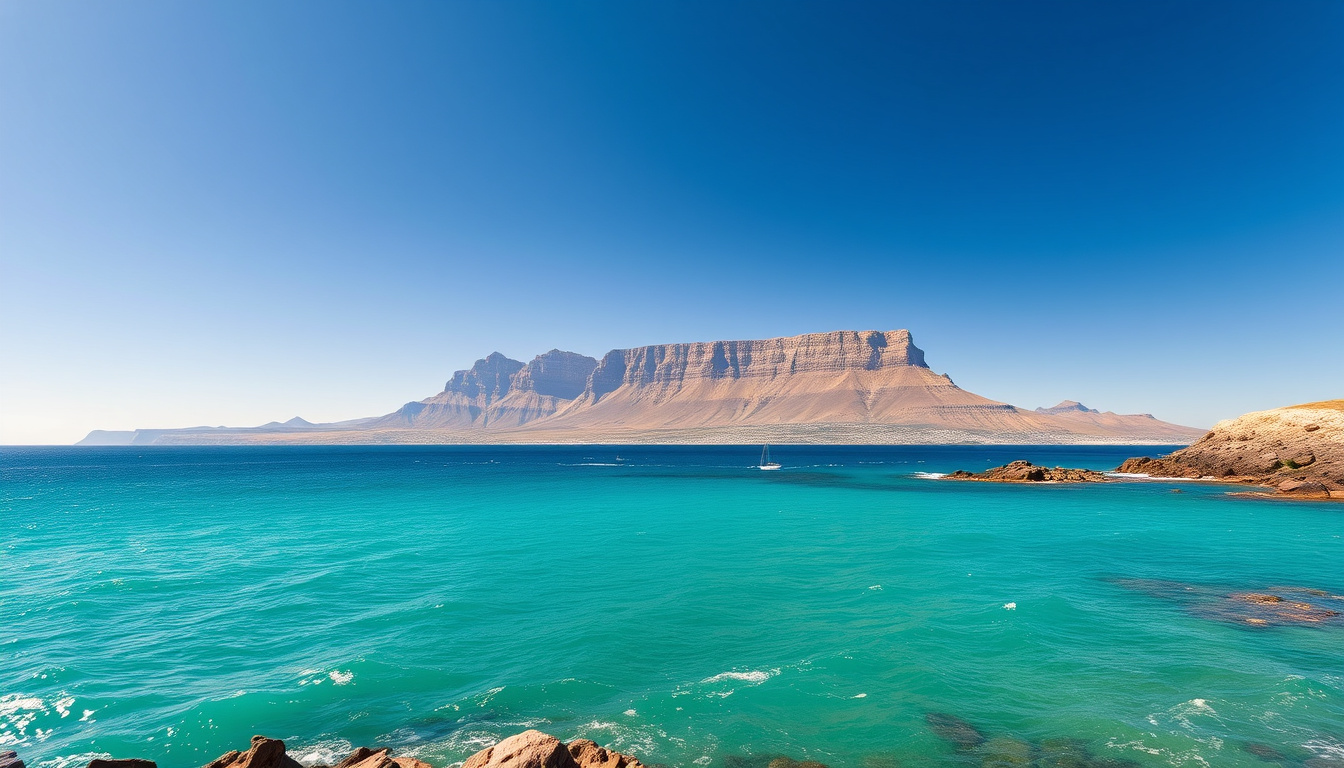
Nestled along South Africa’s southwestern coast, Cape Town offers some of the world’s most spectacular natural vistas. Among these, Table Mountain stands out as an iconic landmark, its unique flat-topped silhouette dominating the skyline. While many admire this natural wonder from the bustling city streets or nearby hiking trails, there’s an equally mesmerizing perspective often overlooked: the maritime view from Cape Town’s shores and surrounding waters. This article explores the captivating scenes of Table Mountain and its neighboring landmarks as seen from aboard ships and vessels off the coast, blending geography, history, and travel tips for an enriched experience.
Table Mountain: South Africa’s Flat-Topped Giant
Table Mountain is easily recognizable by its broad, almost perfectly flat summit stretching approximately three kilometers across. This impressive geological formation forms the backdrop of Cape Town and has earned worldwide acclaim for its distinct “tabletop” appearance.
The Illusion of Flatness
From a distance, especially from sea or far-off vantage points, the mountain appears impressively flat. However, those who visit up close discover that Table Mountain’s summit is far from uniformly level. The rocky terrain features numerous plateaus, gullies, and uneven sections shaped over millions of years. The mountain’s diverse flora and unique geology have made it a designated World Heritage Site and a thriving biodiversity hotspot with many endemic plants.
Surrounding Peaks: Lion’s Head and Devil’s Peak
Flanking Table Mountain are two notable companions that contribute further to the region’s stunning skyline. Lion’s Head, with its pointed cone shape, sits to the northwest and is a favorite for hikers craving panoramic views and exhilarating sunrises. On the opposite side is Devil’s Peak, rising steeply and often shrouded in mist, adding to the mystique of the mountain range.
The Port of Cape Town: A Hub Amidst Natural Grandeur
From the maritime vantage point, the view of Table Mountain is complemented by vibrant port activities. Cape Town’s port is one of Africa’s busiest, handling cargo ships stacked with containers that supply the region.
Maritime Landmarks and Navigation
Sailing ships entering Cape Town’s harbor notice distinctive features such as cargo cranes towering over the docks and radar scanners—essential tools for ship navigation and communication. These devices, often spinning and scanning with precision, assist vessels in safely anchoring or mooring in the busy harbor area known colloquially as the “composite egg,” a term derived from the cluster of antennas and navigation aids situated on the ship’s bridge superstructure.
Shipping Traffic and Anchorage
From the deck of a ship anchored offshore, it’s common to spot other vessels waiting their turn to dock. These moments provide impressive photographic opportunities, placing modern maritime logistics alongside the timeless beauty of Table Mountain in the horizon, creating a dynamic interplay between nature and commerce.
Robben Island: A Historical Landmark in Sight
Beyond the harbor and visible to the right (starboard side) from the sea is Robben Island, a small yet profoundly significant landmass.
Nelson Mandela’s Prison Island
Robben Island holds a heavy historical legacy as the site where South Africa’s former President Nelson Mandela spent 18 years in imprisonment during apartheid. Today, the island has been converted into a museum and heritage site attracting thousands of visitors eager to learn about South Africa’s journey from oppression to democracy.
Visiting Robben Island
Ferries shuttle tourists between Cape Town’s V&A Waterfront and Robben Island, covering an estimated distance of 5 to 7 nautical miles. Though the boats are speedy, only three trips run daily, and boarding gates close 15 minutes before departure. Visitors are encouraged to plan ahead and allow approximately four hours for a comprehensive tour, which includes not only the prison cells but also informative audio guides and scenic views of Table Mountain from the island.
The Ultimate Maritime Perspective: Combining Nature, History, and Adventure
Viewing Table Mountain from the sea provides a fresh, inspiring perspective that encapsulates Cape Town’s complex character—a city of stunning landscapes, rich history, and vibrant economic activity.
Ideal Weather and Visibility
Clear weather days are a treasure for maritime observers as they afford unobstructed views of Table Mountain and its neighboring landmarks. The clarity enhances sightseeing opportunities, with the city skyline, Lion’s Head, Devil’s Peak, and even the “Twelve Apostles” mountain range visible in the distance.
Wildlife Surprise: Seabirds on the Deck
An unexpected joy of maritime viewing is the chance to spot local wildlife. Observers have reported visits from inquisitive seabirds that land briefly on ships, adding a lively touch to the serene environment and reminding us of the interconnectedness of nature in this coastal ecosystem.
Hiking and Cable Car Options for Peak Exploration
For those captivated by the mountain from afar, an up-close adventure awaits.
Hiking Trails
Several well-marked hiking paths wind their way up Table Mountain and Lion’s Head. These trails offer varying difficulty levels suitable for casual walkers to seasoned climbers. Weekend hikers often picnic at the base of Lion’s Head, blending recreation with natural beauty.
Cable Car Convenience
To save time for exploration and enjoy panoramic views effortlessly, many tourists opt for the Table Mountain cable car. Costing roughly 300 South African rand for a round trip, it operates frequently with tickets available both online and onsite. Online reservations are advised to avoid lines, especially during peak seasons.
Frequently Asked Questions About Table Mountain and Maritime Views
1. What is the best time of day to view Table Mountain from the sea?
The early morning and late afternoon offer the most dramatic lighting with softer sunlight highlighting the mountain’s contours. Additionally, these times often provide calmer seas for smoother viewing experiences.
2. How long is the ferry ride to Robben Island from Cape Town?
The ferry ride to Robben Island typically takes about 30 to 45 minutes, depending on weather and sea conditions.
3. Can I see Table Mountain’s “Twelve Apostles” from the maritime view?
Yes, on clear days, the Twelve Apostles mountain range, a series of cliffs extending southwards, is visible alongside Table Mountain, adding depth to the coastal panorama.
4. Are there guided maritime tours that offer these views?
Several companies in Cape Town offer boat tours that circle around the harbor and out to Robben Island, providing excellent photographic opportunities of Table Mountain and its surroundings.
5. Is it safe to hike Table Mountain without a guide?
While many hikers safely ascend Table Mountain independently, it is recommended to use marked trails, carry sufficient water, and avoid trails after dark. Guided hikes enhance safety and offer insightful knowledge about the flora and geography.
6. What wildlife can I expect to see near Cape Town’s maritime area?
Common sightings include seabirds such as gulls and cormorants, as well as occasional seals and dolphins near the coast, enriching the marine experience.
7. How accessible is the Table Mountain cable car?
The cable car is wheelchair accessible and provides transport to the summit in rotating cabins offering 360-degree views, making it suitable for most visitors.
Conclusion
Cape Town’s Table Mountain is an indelible symbol of natural beauty, history, and adventure that mesmerizes millions worldwide. While many cherish the view from land, experiencing its grandeur from the waters off Cape Town introduces a uniquely serene and expansive perspective. From the operational hustle of Cape Town harbor with its cargo cranes and radar towers to the poignant sight of Robben Island and the panoramic peaks of Lion’s Head and Devil’s Peak, this maritime vantage point offers a harmonious blend of human endeavor and natural splendor. Whether aboard a commercial ship, a sightseeing ferry, or exploring the mountain trails yourself, Cape Town’s shoreline magnificence promises unforgettable memories for every traveler.
If you have questions or want to share your own Table Mountain maritime experiences, feel free to leave a comment below. Your insights enrich the story of this incredible South African landmark.