
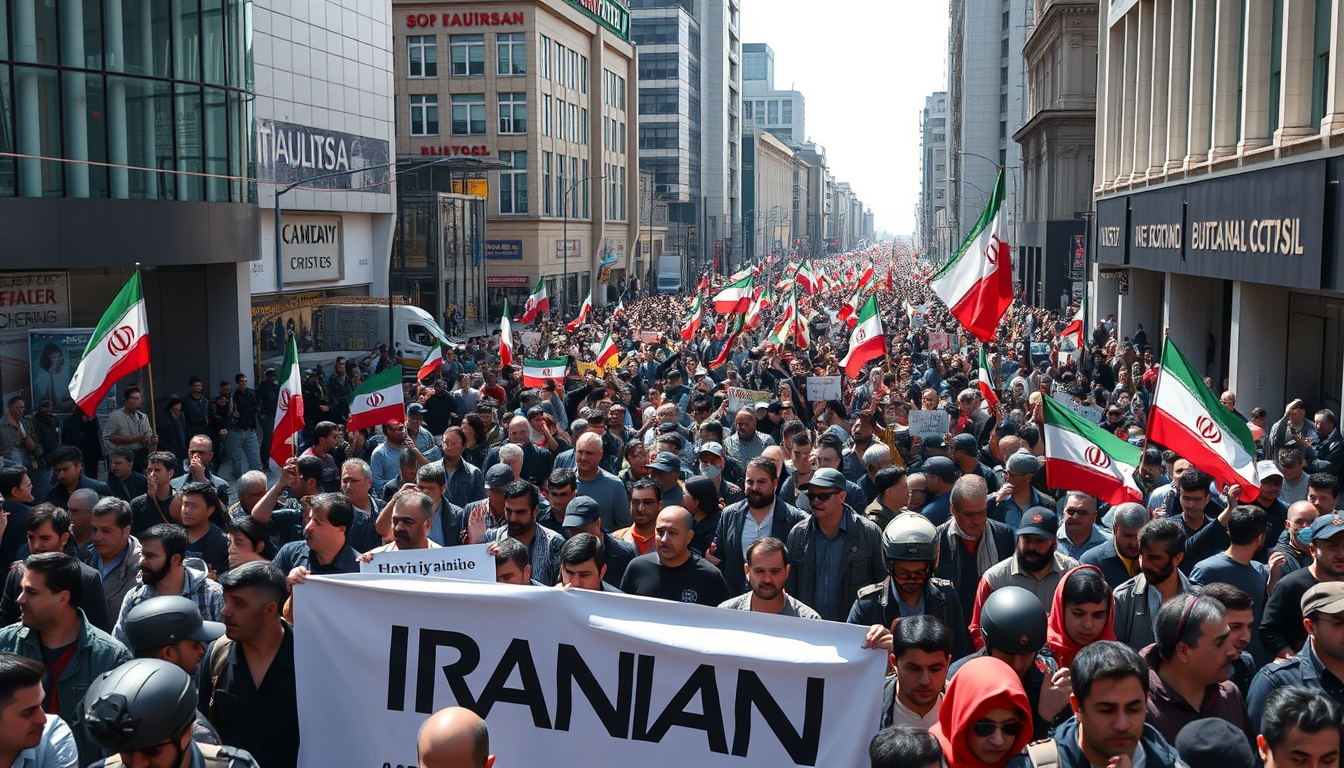
In late 2025, Iran has been shaken by a wave of protests ignited by economic hardship, political frustration, and a palpable desire for change.
Beginning on December 28 at Tehran’s Grand Bazaar, the demonstrations reveal the complex interplay of inflation, currency devaluation, and government repression that has discontent simmering among the Iranian populace.
As inflation rates surge to around
42.2% and the value of the rial plummets to an unprecedented
1.45 million rials per U.S.
dollar, citizens from various walks of life have taken to the streets to voice their dissent.
This article explores the economic factors fuelling the unrest, examines the heavy-handed response from the Iranian government, and delves into the broader international implications of the situation as protests erupt across major cities including Mashhad, Shiraz, and Bandar Abbas.
Understanding these dimensions is crucial for comprehending the intricate fabric of Iranian society and the challenges it faces today.

Key Takeaways
- Protests in Iran are driven by economic dissatisfaction, with skyrocketing inflation and a plummeting currency exacerbating public anger.
- The Iranian government’s violent crackdown has resulted in significant casualties, fueling further unrest and international scrutiny.
- The situation highlights a complex interplay between domestic discontent and geopolitical tensions, particularly with the U.S. involvement.
Economic Factors Fuelling the Unrest
The protests in Iran, igniting on December 28, 2025, at Tehran’s Grand Bazaar, are deeply rooted in economic turmoil that has exacerbated public dissatisfaction.
As citizens contend with soaring living costs and a staggering 42% depreciation of the rial—now valued at a record low of approximately
1.45 million rials per U.S.
dollar—the strain on daily life became unbearable.
With inflation reaching an alarming rate of
42.2%, the populace struggles to afford essential goods, leading merchants to spearhead protests that quickly rippled through major cities including Mashhad, Shiraz, and Bandar Abbas.
While the initial focus was on economic hardship, the scope of the protests broadened, incorporating widespread discontent over governmental corruption, the lamentable state of political freedoms, and overall mismanagement of the economy.
In response to this unrest, the Iranian government deployed heavy-handed tactics, resulting in tragic casualties—at least 116 lives lost.
Amidst claims of foreign interference—specifically targeting the involvement of the U.S.
and Israel—there has been an outpouring of support from exiled political figures, though the protests lack cohesive leadership, complicating their trajectory.
The situation is further convoluted by strained U.S.-Iran relations, marked by recent tariffs imposed by President Trump on trading partners of Iran, amidst a backdrop of ongoing covert communications that sharply contrast with the belligerent public rhetoric.
These dynamics illustrate a multifaceted crisis that intertwines domestic grievances with international politics, deepening the complexities of the Iranian protests.
Government Response and International Implications
The Iranian government’s reaction to the protests has illustrated its deep-seated fears about civil unrest, fueling a cycle of repression that has drawn international concern.
In a bid to quell dissent, authorities have harnessed a range of aggressive measures, from internet blackouts to mass arrests, aiming to stifle the flow of information and limit the mobilization of protestors.
This response not only resulted in tragic fatalities but has also led to a growing sense of isolation for Iran on the global stage, as human rights organizations condemn the regime’s actions.
The government’s narrative of foreign interference, particularly blaming the U.S.
and Israel, seeks to divert attention from internal failings—essentially framing the unrest as a byproduct of external provocateurs rather than as a reflection of the Iranian populace’s disenchantment.
International players, meanwhile, are grappling with how to respond effectively; sanctions and diplomatic pressures continue to be tools in the arsenal aimed at realigning Iran’s behavior.
The complexities of U.S.-Iran relations, underscored by conflicting public and private communications, suggest that while the Iranian protests are predominantly a domestic concern, they resonate beyond national borders, affecting geopolitical strategies and alliances.