
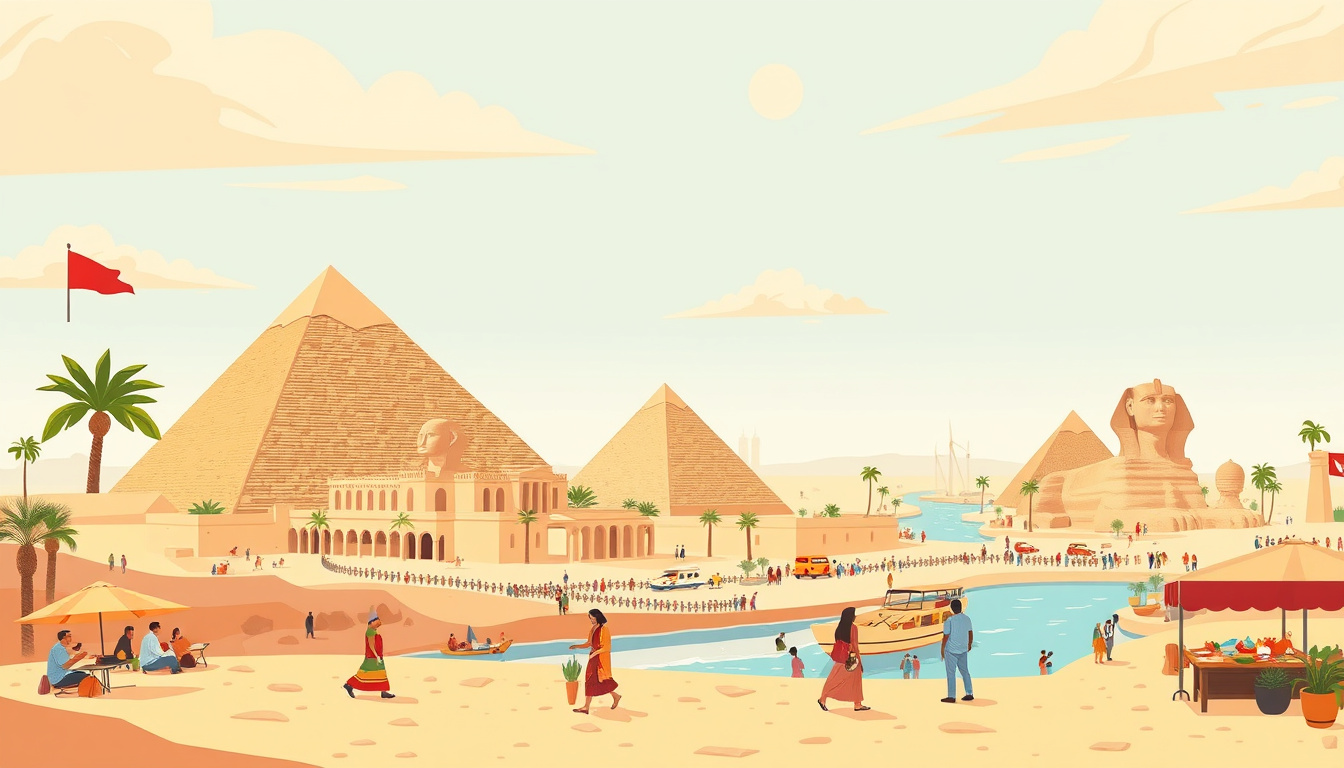
Egypt is a land of old wonders and bright culture. It stays a top pick for world travelers. The Pyramids of Giza impress many, and the Red Sea shores calm the soul. Egypt gives a memory that lasts for those who visit. Be ready before you start your Egyptian trip. This guide holds key hints and clear views to help you plan well and get the best from Egypt.
Arrival and Visa Information
When you plan a trip to Egypt, the visa process comes first. Tourists heading to spots like Sharm El-Sheikh can get a 30-day visa on arrival. The cost is near $25. This visa lets you see places like Cairo, Alexandria, and Luxor without extra permits.
Some areas use a different visa if you do not pick the all-region option. Some spots have their own rules. Plan your trip carefully if you want to see many parts of Egypt.
Best Time to Visit Egypt
Egypt’s weather changes a lot over the year. The best time to visit runs from October to April. In these months, the air is mild so you can walk the pyramids, temples, or old markets without suffering heat.
In the summer, especially in July, the heat grows high. The middle of the day, from 12:00 PM to 3:00 PM, can be very hot. If you travel in summer, plan outdoor tasks when it is cooler.
Seeing Old and New Egypt
Egypt comes as a story of two cities: Old Egypt and New Egypt. Old Cairo is full of history with busy markets, old mosques, and ancient streets. In contrast, New Cairo and other big cities have modern goods like modern dining places, shopping centers, and comfortable homes.
This split can change your trip. Old Cairo gives you a look at Egypt’s long past, and New Cairo gives you ease and modern life.
Safety Tips for Travelers in Egypt
Egypt is mostly safe for tourists, especially in busy areas during daytime. Locals are friendly. Many visitors see Cairo’s old sites and markets without trouble. Still, stick to common travel safety steps:
- Pick a trusted tour guide if you feel unsure about moving alone.
- Watch your steps. Do not go to dark or empty lanes at night.
- Stay alert with street sellers. Near the pyramids and in old markets, some may charge too much. Set prices first to keep clear of surprises.
Tour options set by well-known hotels or agencies keep you away from hassle with local sellers and help your trip go well.
Handling the Markets and Bargaining
When you walk through Egypt’s markets, plan how to meet street sellers:
- Agree on a cost before buying.
- Treat bargaining as a friendly talk but hold tight to your wage limit.
- When you buy tickets or tours near major sights, booking through your hotel or its peers can save you from extra charges.
Cuisine and Dining in Egypt
Egypt’s food reflects a deep mix of tastes. Many dishes appeal to different palates:
- Staples come as rice, stuffed vegetables, kebabs, and shawarma.
- Appetizers such as hummus, falafel, and grape leaves fill many menus.
- Fresh tomato and leafy greens mix well in many salads.
- A range of bread types shows Egypt’s food ways.
When you try food by the street, check that the food is made cleanly. Stick to well-cooked items like kebabs and shawarma to keep your stomach safe. Drink bottled water and eat from known spots to lower the risk of illness.
In hotels, breakfasts usually include eggs, cheeses, and yogurts. Pork is not common because of local food rules.
In modern areas like New Cairo, you may see global chains like Starbucks, Dunkin Donuts, and Krispy Kreme, which bring known meals.
Accommodation Options
Egypt hosts many places to stay, helped by a strong tourism field.
- Find a wide range of spots from high-end resorts run by big hotel chains (Hyatt, Marriott, Four Seasons) to cheaper apartments from services like Airbnb.
- Main resort areas sit in Cairo, Luxor, and Sharm El-Sheikh along the Red Sea.
- For cheaper stays, check the area well to be sure it is safe and has good links.
For example, an Airbnb room can cost as low as $20 per night. Look for safety and closeness to sights to save on extra travel time and cost.
Transportation Within Egypt
Travel in Egypt gives you many ways to move. Your choice depends on how you plan to travel and what you like:
- For long trips, flights join Cairo to cities like Luxor and Aswan. Sleeper trains allow you to relax while you move slowly.
- For short trips, a private car is better than renting your own. Road rules and traffic can challenge visitors.
Buses run between cities but may break down or run late. It is wise to ask your hotel to get a private driver; many do this each day.
Inside cities and tourist spots, local taxis or private tours let you move with more ease than buses.
Activities and Attractions to Include
Egypt holds many sights that match different choices:
Historical Sites
- Pyramids of Giza and the Sphinx: Near Cairo, famous for long-standing history.
- Valley of the Kings: Near Luxor, where old rulers rest.
- Temple of Horus: In Edfu, a temple kept very well.
- Abu Simbel and Aswan: Seen for large temples and striking views.
- Mount Sinai: Also known as Moses Mountain; climb up for a fresh sunrise.
Water and Beach Activities
- The Red Sea near Sharm El-Sheikh and Hurghada is known for great diving and snorkeling because of clear reefs.
- Beach towns give you rides on jet skis, banana boats, or a calm walk on the docks.
Nile River Cruises
- River trips include live shows, buffet meals, and wide views.
- Cruises run from Luxor to Aswan, giving you deep views into Egypt.
Remember that works on the Aswan Dam can keep the Nile route busy. Plan your ride around these times.
Frequently Asked Questions (FAQ)
Q1: Do I need a visa for Egypt?
A1: Most guests get a 30-day visa on arrival for about $25. This visa lets you travel across main areas. Check rules for your nation before you go.
Q2: What is the safest way to get around Egypt?
A2: Hiring a private driver or joining a guided tour is best for long trips and sightseeing.
Q3: How should I deal with street sellers near major spots?
A3: Fix the cost first and do not agree until you have a clear price. Use official tour resources or ask your hotel.
Q4: Can I drink tap water in Egypt?
A4: It is best to drink bottled water or water that has been cleaned.
Q5: What should I pack for Egypt’s weather?
A5: Pack light, loose clothes for warm times. Bring a light jacket for cooler nights, and dress with respect in religious or conservative spots.
Q6: Are guides who speak English available?
A6: Yes, many trusted guides speak English and can help with history walks.
Q7: Is it better to rent a car or use local travel options?
A7: Renting a car is hard due to traffic and unknown roads. Private drivers or planned tours save time and stress.
Conclusion
Traveling to Egypt brings old history, rich culture, and deep natural views close by. When you learn the visa steps, set plans around the weather, keep safe, and treat locals with care, you will see Egypt with clear eyes. From busy Cairo streets in old quarters to calm shores along the Red Sea, Egypt leaves long memories. Whether you stand by the pyramids, cruise on the Nile, or taste local food, keeping these hints close will help your trip run smooth.
Start your Egyptian trip well-prepared and find the true charm of a land that has captured hearts for many years. Safe travels!