
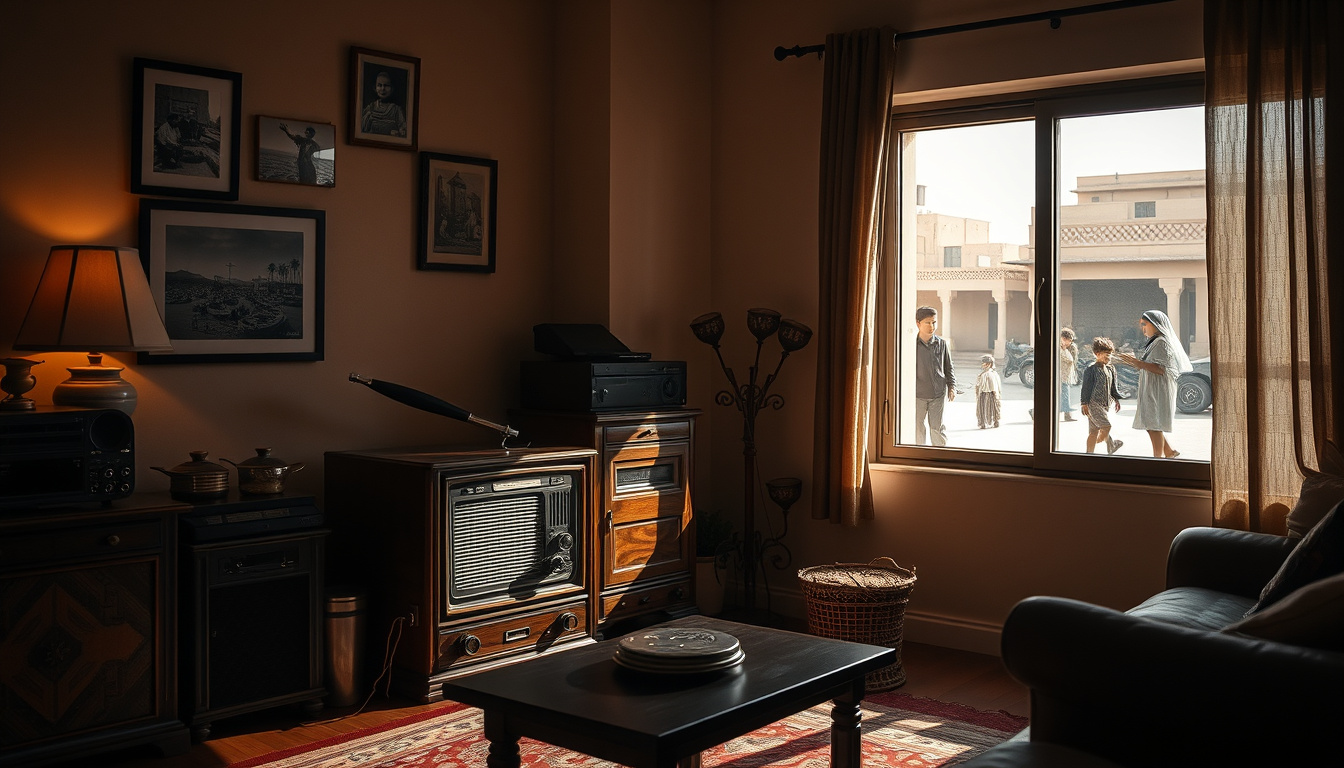
In the cozy confines of my childhood home, the soft, melodic hum of a radio cradled me to sleep each night.
It was not just any radio; it belonged to my grandmother, Zeinab, whose nurturing presence was only enhanced by the soothing sounds that danced through the airwaves.
Nestled between the rustling pages of a well-loved book and the aromatic scent of her famous koshari, this beloved radio was a steadfast companion, illuminating my young imagination with the rich tapestry of Egyptian culture.
As I reminisce about those moments, I realize that the radio was more than an appliance; it was a vital link to my heritage, weaving the stories, music, and history that defined our identity as Egyptians.
In this article, we’ll explore not only my personal journey with my grandmother’s radio but also delve into the evolution of Egyptian radio itself—a vibrant medium that shaped the hearts and minds of generations.

Key Takeaways
- The author’s grandmother’s radio served as a comforting source of companionship and nostalgia during their childhood.
- Egyptian radio has a rich historical background, beginning with its establishment in 1927, influencing generations of listeners.
- The cultural impact of radio in Egypt is profound, shaping identity and providing entertainment and education to millions.
The Comforting Presence of Grandmother’s Radio
The glow of my grandmother Zeinab’s radio is etched into my childhood memories, a nostalgic emblem of comfort that played an instrumental role in my upbringing.
As I drifted to sleep in her cozy home, the warm light flickering from the old radio enveloped me in a sense of security while the mellifluous voices of renowned Egyptian actors and singers softly filled the air.
Beyond being just a device, that radio was a portal to a world of companionship, educational insights, and entertainment, capturing the hearts of countless Egyptians over the decades.
The roots of this comfort can be traced back to 1927 when Habashi Gerges pioneered the establishment of the first national radio station in Egypt, marking a transformative moment in the country’s cultural landscape.
This innovation gave rise to an era of rich storytelling and diverse musical expressions, ultimately leading to the proliferation of private radio stations that pepper the Egyptian airwaves today.
This legacy highlights not only the evolution of radio in Egypt but also its enduring role in shaping the cultural narrative, serving as a cherished link between generations.
The Evolution of Egyptian Radio and Its Cultural Legacy
As the years progressed, Egyptian radio continued to evolve, adapting to the changing preferences of its audience while maintaining its core role in society.
The introduction of new technologies and formats allowed for a greater variety of programming, from talk shows discussing contemporary issues to radio dramas that captivated listeners with compelling narratives.
Iconic radio shows, such as ‘El Lobna el Kabeer,’ brought humor and insight into daily life, while educational content helped shape public perception and awareness around sociopolitical matters.
Moreover, the rise of FM radio further revolutionized broadcasting by offering improved sound quality and a wider reach, enabling listeners in even the most remote areas of Egypt to tune in to their favorite programs.
This adaptability not only enriched the listening experience but also reinforced radio’s position as a vital cultural influence—an omnipresent companion in homes and public spaces alike, fostering a sense of community and shared heritage among Egyptians.