
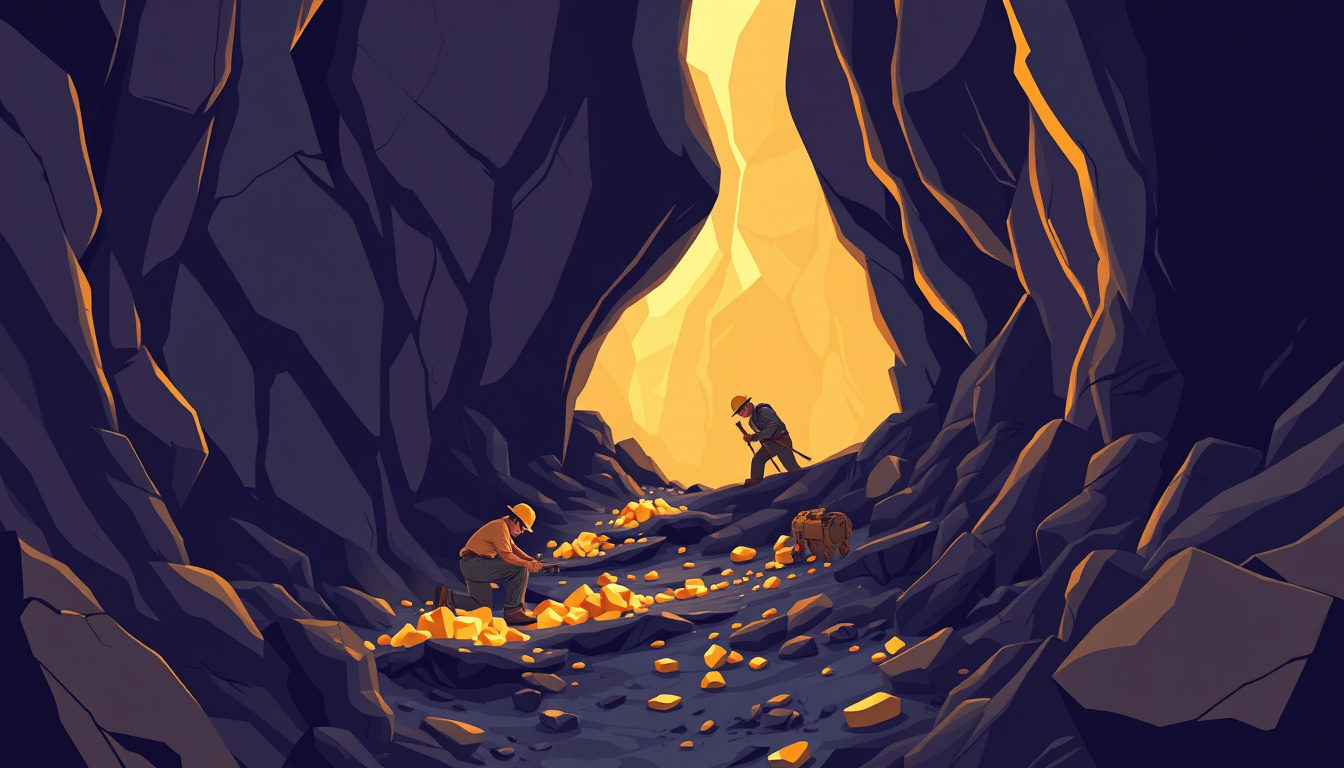
Deep within the heart of an active Indonesian volcano lies a hazardous profession that few dare to explore. Here, hundreds of miners toil daily inside the Ijen volcano, extracting sulfur under conditions so extreme that many do not live past 50 years. This yellow-hued mineral, locally known as “devil’s gold,” is essential to a range of everyday products yet comes at a staggering human cost. This article delves into the unforgiving world of volcanic sulfur mining, the risks miners face, and why this archaic industry persists despite modern alternatives.
The Landscape of Sulfur Mining at Ijen Volcano
The Ijen volcano, situated on the island of Java, is one of the few places in the world where sulfur mining is conducted manually amid an active volcanic crater. Unlike most sulfur production today, which is a byproduct of oil and gas refining, miners at Ijen delve into a natural sulfur deposit formed by the volcano’s sulfur-rich gases.
The Grueling Journey to the Crater
Miners like Mistar start their day with a grueling two-mile hike from the nearest motorable point up to the volcano’s crater ridge. The steep, rugged terrain is unforgiving, and roads are nonexistent, leaving miners dependent on their own physical endurance. Mistar carries just a basket and a crowbar, tools that appear inadequate against the monumental task ahead.
At the crater’s edge, miners descend approximately 1,000 feet into an environment where temperatures can exceed 100 degrees Fahrenheit and the air is laden with toxic sulfurous smoke. This setting is not just physically exhausting—it’s life-threatening.
The Deadly Hazards of Mining “Devil’s Gold”
The perils of sulfur mining at Ijen are multifaceted, ranging from physical strain to exposure to toxic gases.
Toxic Fumes and Dangerous Gases
Miners face two distinct types of sulfur smoke. The first emanates directly from deep volcanic fissures, funneled through pipes installed in the crater. When the high-temperature gases contact cooler external air, sulfur vapor condenses into liquid droplets, which then solidify into bright yellow sulfur crystals— the “gold” the miners harvest.
The second, more sinister threat comes from volcanic gases bubbling beneath the crater’s acidic sulfur lake. These invisible gases release thin, white clouds of gas that can be fatal. Miners must be vigilant: if these white smoke clouds appear thick, they must immediately evacuate to avoid respiratory poisoning or worse.
Given the risks, protective gear is essential. But miners are freelance contractors and rarely receive company-supplied safety equipment. Many cannot afford proper gas masks and instead resort to makeshift protection such as water-dipped handkerchiefs or towels. This rudimentary defense barely mitigates exposure to sulfur powder and toxic fumes, which cause chronic respiratory problems and skin conditions like rashes and blisters.
The Physical Toll
After chipping solid sulfur blocks using crowbars and hands—frequently causing painful injuries from the rough, sometimes hot, yellow mineral—miners load their baskets. These loads can weigh as much as 200 pounds, a burden heavier than many miners’ own body weight. Mistar himself weighs 132 pounds but routinely shoulders around 154 pounds of sulfur.
The journey back is as daunting as the descent—miners climb steep crater walls, often in minimal footwear such as flip-flops. The exhausting physical labor, combined with constant inhalation of toxic gases, contributes to the miners’ alarmingly low life expectancy.
Uses of Sulfur: From Matches to Winemaking
Sulfur is a raw material of global industrial significance. The sulfur mined at Ijen does not just sit idle; it funnels into many products integral to daily life. After extraction, sulfur crystals are transported to a nearby processing factory owned by the mining company, PT Candi Ngrimbi.
Here, the sulfur is melted and purified by filtering out contaminants like sand and acidic residues. The pristine sulfur product is packaged and sent to nearby sugar factories, where it plays a vital role in whitening sugar—an essential quality factor for consumers.
Beyond sugar, sulfur is processed into sulfuric acid, one of the world’s most widely used chemicals. Sulfuric acid underpins industries as diverse as:
- Fertilizer manufacturing
- Matchstick and fireworks production
- Gunpowder fabrication
- Detergent and paper production
- Battery chemistry
- Rubber manufacturing
- Winemaking preservation
Despite its versatility, over 98% of global sulfur comes as a byproduct from oil and gas refining, making natural volcanic mining relatively obsolete from a purely industrial perspective.
Why Does Volcanic Sulfur Mining Persist?
Given the risks, hardships, and environmental challenges, why does sulfur mining endure at Ijen?
Socioeconomic Factors
In this remote region of Indonesia, sulfur mining remains one of the few better-paying jobs available. Miners work as freelance contractors and earn approximately $12 to $17 per day, based on the weight of the sulfur they haul. For many, this income surpasses alternatives such as farming or fishing.
Despite the dangers, miners see little choice but to continue. The mining company pays about 9 cents per kilogram of sulfur, contributing to ongoing criticism over the low wages in this perilous job.
Industrial and Commercial Considerations
PT Candi Ngrimbi continues operations partly because sulfur from Ijen, even if less pure, is cheaper and easier to source locally. While refined sulfur from oil and gas boasts higher purity, companies sometimes prefer the cost advantages of natural mining, especially where regulatory enforcement is lax.
Tourism Impact
Unintendedly, tourism incentivizes preserving the sulfur mining tradition. Visitors flock to Ijen volcano to witness the ethereal blue flame emitted by combusting sulfur—a unique natural spectacle. During daytime, tourists hike to watch miners at work, often protected with proper gas masks while miners themselves remain vulnerable.
Some miners have begun supplementing their income as tour guides or selling sulfur-themed souvenirs. However, these options have not yet replaced mining as a primary livelihood.
The Heavy Burden: A Miner’s Life
At the day’s end, exhausted miners like Mistar return home to their families, carrying the physical and invisible scars of their labor. The volcano looms overhead—not just as a geological marvel but as a relentless force that exacts a daily price on those who seek to tame it.
Their stories are a testament to human endurance, economic necessity, and the complex interplay between nature’s bounty and its dangers.
Frequently Asked Questions (FAQs)
1. Why is sulfur called “devil’s gold” in volcanic mining?
Sulfur from volcanic sources is known as “devil’s gold” because of its bright yellow color resembling gold and the hazardous, hellish environment from which it is mined—active volcanic craters emitting toxic gases.
2. How dangerous is sulfur mining inside the Ijen volcano?
Extremely dangerous. Miners face intense heat, toxic sulfur gases that can cause respiratory problems, skin injuries from handling sulfur, and the physical risks of hauling heavy loads over steep, unstable terrain. Many miners have shortened life expectancies due to chronic exposure.
3. What safety measures do sulfur miners have?
Most miners cannot afford proper gas masks and rely on makeshift protection such as handkerchiefs dampened with water. Safety is minimal, with evacuation only possible upon visual detection of deadly white gas clouds.
4. How does volcanic sulfur differ from industrial sulfur?
Volcanic sulfur is naturally formed and often contains impurities like sand or acidic compounds, making it less pure. Industrial sulfur, typically derived from oil and gas refining, is highly pure and preferred for many commercial uses.
5. What products use sulfur?
Sulfur is crucial in producing sulfuric acid, which is fundamental in fertilizers, matches, fireworks, gunpowder, detergents, paper, batteries, rubber products, winemaking, and also in whitening sugar.
6. Why haven’t sulfur mines like Ijen closed given their dangers?
Economic reasons primarily. The mining job pays better than local alternatives, and the mining company benefits from cheaper sulfur raw material. Moreover, tourism around the volcano provides a secondary economic boost.
7. How has the COVID-19 pandemic affected sulfur mining at Ijen?
To enforce social distancing, miners were split into two shifts, decreasing daily yielded sulfur from about 25 tons pre-pandemic to 10 tons today, limiting their income and productivity.
Conclusion
Mining sulfur from the Ijen volcano is among the world’s most perilous occupations. The miners’ daily battle against toxic gases, extreme heat, and backbreaking physical labor highlights a harsh reality where economic necessity outweighs health and safety concerns. Despite industrial advances rendering such manual sulfur extraction largely obsolete globally, the tradition persists in Indonesia’s remote regions as a vital source of livelihood, underscored by complex socio-economic factors.
“Devil’s gold” thus remains a bittersweet symbol—the glowing yellow sulfur blocks mined amidst hazardous conditions, illustrating human tenacity amid nature’s fury. As technology and economies evolve, confronting the human cost of such risky professions is essential to improving the lives of those who continue to carry the heavy weight of this ancient trade.