
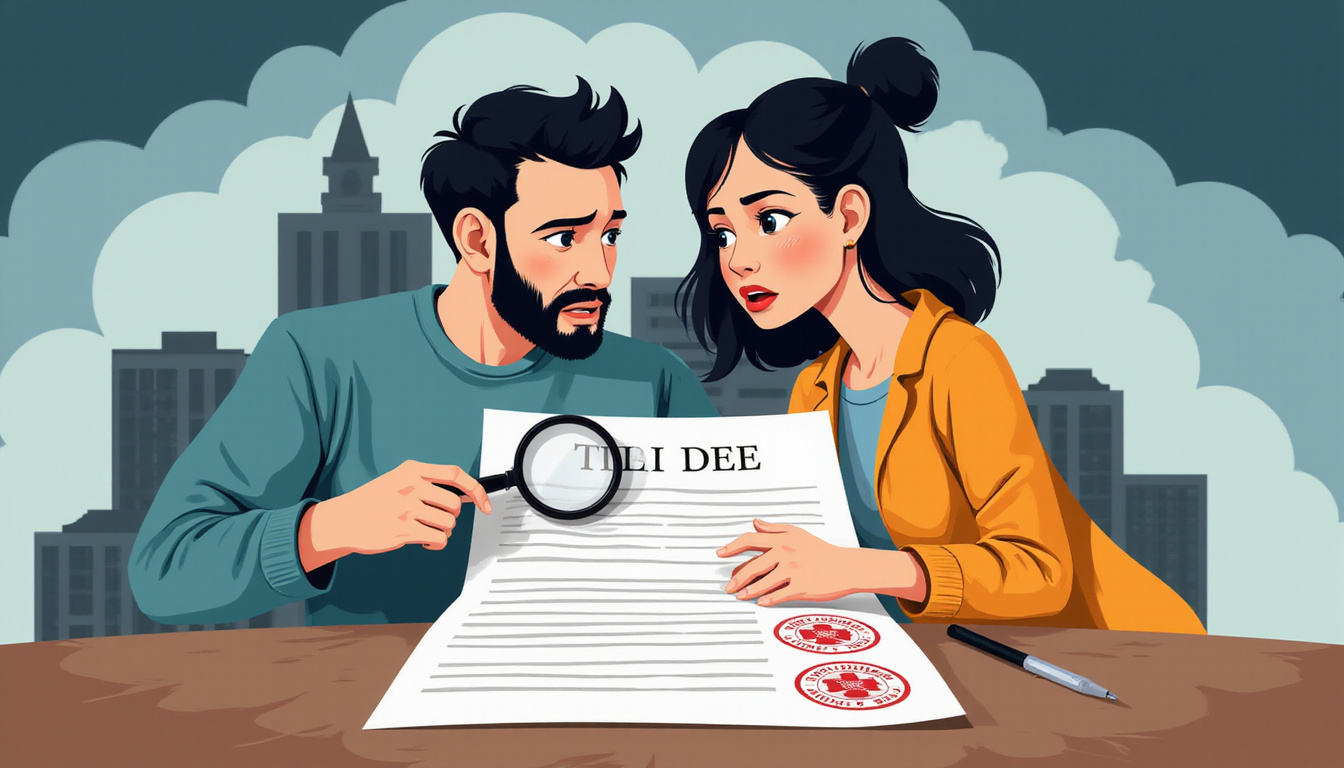
Buying a home is often the biggest financial decision most people ever make—and the title deed is the legal backbone of that purchase. Yet many buyers sign contracts and pay deposits without fully understanding what’s written on the deed, who really owns the property, or what hidden risks might be attached. Overlooking title deed issues can lead to disputes, unexpected costs, or even losing your home.
This guide explains the most common , with practical steps to protect yourself and your investment.
What is a title deed—and why does it matter so much?
A title deed is the official legal document that proves who owns a property. In simple terms, it’s your evidence that:
- You are recognized as the owner by law.
- You can legally sell, mortgage, lease, or pass on the property.
- No one else has a superior claim to your home.
Because the title deed sits at the center of property rights, any error, omission, or hidden claim can turn into a serious problem later. That’s why careful deed review and verification before purchase is critical—especially in markets where records might be inconsistent or slow to update.
Pitfall 1: Not verifying the true legal owner
One of the most common and dangerous mistakes is assuming that the person selling the property is the legal owner.
Why this is a problem
If the seller isn’t the registered owner—or doesn’t have proper authority to sell—you risk:
- Paying money to someone who can’t legally transfer ownership.
- Getting dragged into inheritance or family disputes.
- Facing court cases years after your purchase.
What to check
Before you commit:
- Request a recent official copy of the title deed from the relevant land registry or real estate authority.
- Match the seller’s ID to the name on the deed.
- If the seller is acting under a power of attorney, have your lawyer:
- Confirm it’s still valid and not revoked.
- Check that it explicitly grants the power to sell that specific property.
- For inherited properties, verify the inheritance documents and that all heirs have agreed to the sale.
Never rely only on photocopies or verbal assurances. An independently obtained, up‑to‑date title extract from the registry is essential.
Pitfall 2: Overlooking liens, mortgages, and other encumbrances
Even if the seller is the rightful owner, the property might be burdened with debts or legal rights in favor of others.
Typical encumbrances to watch for
- Mortgages or home loans.
- Tax liens or unpaid taxes secured against the property.
- Court judgments registered on the title.
- Easements and rights of way (e.g., neighbors using part of the land).
- Long-term leases or registered tenancy rights.
If these issues aren’t resolved before you buy, you may inherit them along with the property.
How to protect yourself
- Order an official title search from the responsible government office or registry.
- Ask for written confirmation from the seller regarding:
- Outstanding loans secured on the property.
- Any disputes or court cases involving the property.
- Include clauses in the sale contract stating that:
- The property will be transferred free from all encumbrances.
- The seller is responsible for clearing any registered debts before completion.
In many jurisdictions, mortgage lenders will insist on a thorough search before granting a loan. Even if you’re paying cash, you should demand the same level of diligence.
Pitfall 3: Inconsistent property descriptions and boundaries
Another frequent problem is a mismatch between what the title deed describes and what exists on the ground.
Common inconsistencies
- Different property area (sqm/m²) than advertised.
- Discrepancies in plot number or unit number.
- Boundaries or coordinates on the deed that don’t match the fence or building lines.
- Missing rights to parking spaces, rooftops, storage areas, or gardens.
Such inconsistencies can create disputes with neighbors, the developer, or local authorities and can complicate future resale.
Steps to avoid boundary headaches
- Compare:
- The title deed description (plot number, area, coordinates, floor, unit).
- The approved plans and permits.
- The actual property you are viewing.
- Commission a surveyor or engineer (independent from the seller or developer) to:
- Confirm the property’s area and boundaries.
- Ensure that the structure matches the approved plans.
- For apartments, verify whether common areas (stairs, roof, parking) are:
- Clearly mentioned in the title deed or building registry.
- Properly shared between unit owners.
A small investment in professional verification can prevent boundary disputes that might otherwise drag on for years.
Pitfall 4: Ignoring zoning, planning, and building violations
Even with a clean title deed, the property itself may not fully comply with planning laws or building regulations.
How this affects buyers
- Authorities might order demolition of illegal extensions or floors.
- You could face fines or be blocked from connecting utilities or selling later.
- Planned infrastructure projects (roads, utilities) could affect your land.
Essential checks
- Confirm that the building has:
- Valid building permits and approvals from the municipality or planning authority.
- A completion certificate or equivalent where required.
- Check zoning and land use:
- Is the land zoned residential, commercial, agricultural, or mixed?
- Are there any future development plans (e.g., new highways) affecting your parcel?
- Ensure any additions (balconies, rooms, extra floors) are:
- Legally approved.
- Reflected in the building documents, even if not on the original title deed yet.
Planning and zoning issues might not always appear directly on the title deed, so you may need to consult local authorities or a planning specialist.
Pitfall 5: Buying off-plan or in new developments without deed clarity
Buying off‑plan or in a newly built compound can be attractive, but it carries specific title risks.
Typical issues in new developments
- The land title is still in the developer’s name, not yet subdivided into individual units.
- Infrastructure and common areas are not properly registered.
- Promised facilities (clubhouse, parking, green areas) are unclear in legal terms.
- Delays or legal disputes over the main land plot.
How to reduce off-plan risk
- Confirm that the developer:
- Holds a clear land title deed for the project land.
- Has the required licenses and approvals for construction and marketing.
- Read the sales contract carefully:
- Does it guarantee eventual issuance or transfer of an individual title deed to you?
- Are timelines and penalties for delay clearly stated?
- Ask whether earlier phases have already received:
- Registered title deeds for unit buyers.
- Utilities connection and completion certificates.
If the project is large or in a rapidly changing area, consider speaking to other buyers or an independent local lawyer experienced with that developer or neighborhood. Videos like “Things I Wish I Knew Before Moving to Egypt – My Honest Experience” (
can also give useful ground‑level context on dealing with developers, agents, and paperwork in the region.

Pitfall 6: Not understanding co-ownership and shared rights
Many properties are owned jointly—by spouses, siblings, or business partners. If the title deed doesn’t accurately reflect those realities, you might face future conflict.
Co-ownership traps
- One co‑owner sells without the consent of others.
- Divorces or family disputes lead to challenges over the sale.
- Heirs appear later claiming shares not disclosed at the time of purchase.
What to do
- If there are multiple names on the title, ensure:
- All co‑owners sign the sale contract and any related documents.
- Ask to see:
- Marriage certificates, divorce judgments, or inheritance documents where relevant.
- Make sure the contract:
- Clarifies the percentage share you are buying (if not 100%).
- States that all parties with any right to the property have agreed to the sale.
Where possible, your lawyer should confirm that no hidden heirs or co‑owners are likely to appear with valid legal claims.
Pitfall 7: Failing to register your own title deed properly
Buying the property and paying the price doesn’t automatically guarantee legal security; registration is what usually completes your ownership in the eyes of the state.
Why registration matters
In many legal systems, unregistered property transfers:
- Are hard to enforce in court.
- Can be overridden by later registered transfers.
- Make it difficult to obtain mortgages or sell to cautious buyers.
According to the World Bank, transparent and reliable property registration systems are key to protecting property rights and encouraging real estate investment (source: World Bank – Doing Business: Registering Property).
How to avoid registration issues
- Understand from the start:
- Which authority handles property registration in your area.
- What fees and taxes are due on registration.
- Make registration:
- A condition of completion in the sale contract.
- The joint responsibility of buyer and seller (or clearly allocated).
- Keep copies of:
- All receipts, tax payments, and official stamped documents.
- The final registered title deed or land registry extract in your name.
Never delay registration just to “save money.” The real cost of a weak legal position can be far higher than any fees.
A practical pre-purchase title deed checklist
Before committing to buy, work through this quick checklist with your lawyer or trusted advisor:
- Obtain an official, recent copy of the title deed from the registry.
- Verify the seller’s identity and legal capacity to sell.
- Conduct a title search for:
- Mortgages and liens
- Court judgments
- Easements and long-term leases
- Compare the deed with:
- Survey or site plan
- Approved building and zoning documents.
- Confirm compliance with:
- Building permits
- Completion certificates (if applicable)
- Clarify co‑ownership or inheritance issues; ensure all necessary parties sign.
- Agree on:
- Who will clear any outstanding debts.
- The timeline and process for registration in your name.
- Include protective clauses in the sale contract about:
- Delivery of a clean title.
- Remedies if hidden issues are discovered later.
Treat this checklist as a minimum, not a luxury—especially in emerging or fast‑growing property markets.
FAQ: Common questions about title deed issues
1. What is checked during a title deed search?
A typical title deed search looks for the current registered owner, past transfers, mortgages, liens, court judgments, and any rights of way or easements affecting the property. It may also reveal whether the land is part of a larger development or subject to government or municipal plans. Always request an official, up‑to‑date search instead of relying on informal statements.
2. How can I know if a title deed is genuine?
To verify a property title deed, obtain a certified copy directly from the official land registry or real estate authority. Compare the document number, owner’s name, plot or unit number, and area against the seller’s documents and ID. If anything doesn’t match—such as spelling, numbers, or stamps—ask your lawyer to investigate further before paying any deposit.
3. Do I still need a lawyer if the title deed looks clean?
Even when a house title deed appears clean, a specialized real estate lawyer can catch issues that are easy for non‑experts to miss: planning violations, missing co‑owner consent, ambiguous contract clauses, or registration pitfalls. Because buying a home involves large sums and long‑term consequences, professional review is usually a modest cost compared to the protection it provides.
Secure your dream home by getting the title deed right
Your home should be a source of security, not legal anxiety. By understanding how a title deed works—and the most common pitfalls surrounding ownership, encumbrances, boundaries, planning, co‑ownership, and registration—you can dramatically reduce the risks of disputes, surprise debts, or even losing your property.
Before you buy, surround yourself with the right professionals: an independent lawyer, a reliable surveyor or engineer, and a reputable agent who respects due diligence. Ask tough questions, insist on official documents, and don’t rush through title checks just to close quickly.
If you’re planning your next property purchase—whether it’s your first home, a family upgrade, or an investment—now is the time to act. Start by gathering the property documents you have, list your questions about the title deed, and speak with a qualified real estate lawyer or advisor who knows your local market. Putting the title deed at the center of your decision today is the smartest way to protect your home and your financial future tomorrow.