
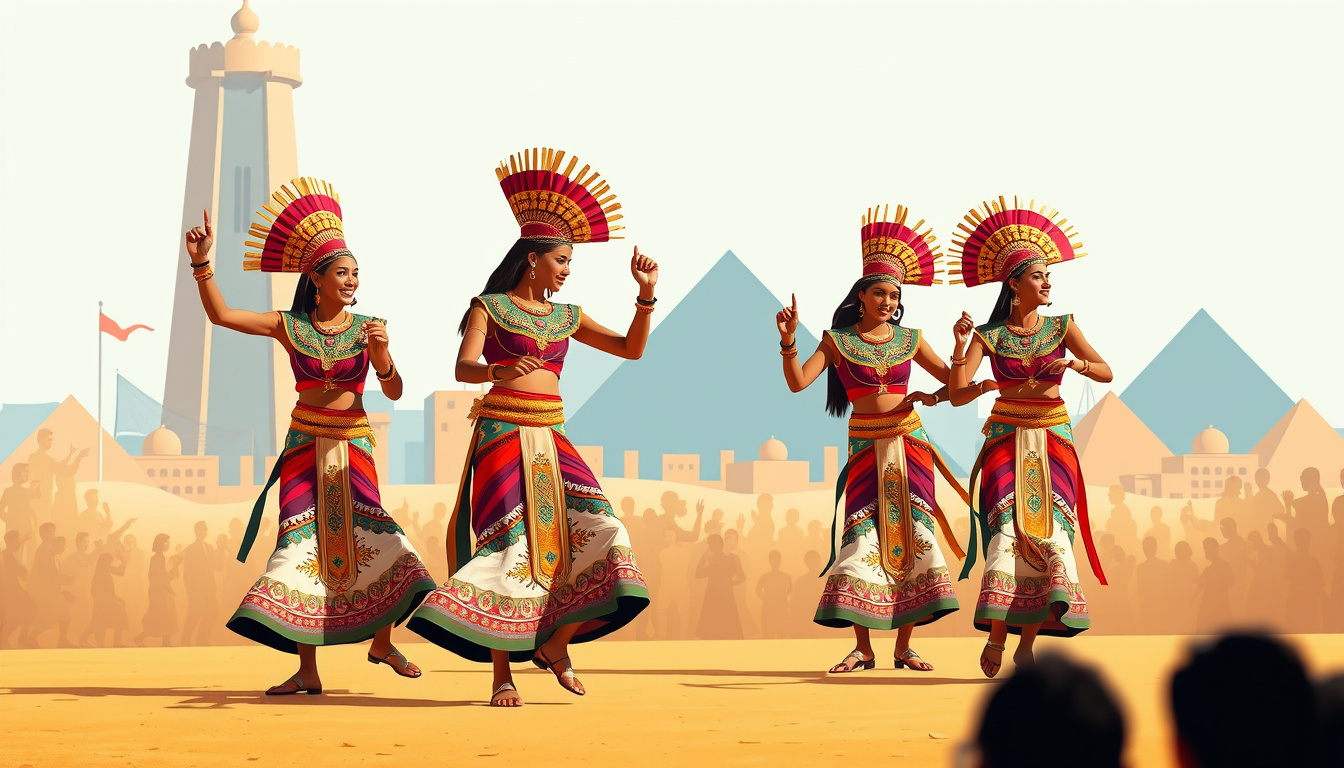
Dance is a universal language that transcends words, and in Egypt, it serves as a window into the rich tapestry of its cultural heritage.
The AUC Folklore Troupe, founded in the 1970s at the American University in Cairo, stands as a prominent institution in celebrating and preserving the country’s diverse dance traditions.
Under the leadership of choreographer Hassan Farouk and trainer Mohamed El Faramawy, this dynamic troupe not only honors Egypt’s vibrant folklore but also plays a crucial role in shaping the lives of its student members.
Journeying through the inspiring tales of dedicated dancers like Sherry Wael, Omar Abd El Hady, Holy Seweify, and Adham Gohar, we explore how the AUC Folklore Troupe empowers youth, fosters cultural pride, and highlights the importance of dance as a mode of self-expression and storytelling.
Join us in uncovering the transformative experiences that define the troupe’s commitment to Egyptian dance heritage.

Key Takeaways
- The AUC Folklore Troupe serves as a vital platform for preserving Egypt’s diverse dance heritage.
- Members of the troupe experience personal growth through dance, fostering self-expression and cultural connections.
- The troupe encourages inclusivity in dance, challenging stereotypes and promoting cultural pride among its members.
The Historical Significance of the AUC Folklore Troupe
The AUC Folklore Troupe, a vibrant beacon of Egypt’s rich cultural tapestry, was established in the 1970s at the American University in Cairo by the visionary Hassan Afifi.
This esteemed group is dedicated to celebrating and preserving Egypt’s diverse dance traditions through energetic practice and captivating performances.
Under the mentorship of the talented choreographer Hassan Farouk and the dedicated trainer Mohamed El Faramawy, the troupe fosters an inclusive environment where students can delve into the art of folklore dance, emphasizing its profound significance in the cultural heritage of Egypt.
Noteworthy members such as Sherry Wael, Omar Abd El Hady, Holy Seweify, and Adham Gohar share their transformative journeys within the troupe, each highlighting the personal and communal impacts of dance.
Sherry, in particular, revitalized the traditionally dwindling troupe, creating a thriving community of approximately 30 dancers, and underscores the crucial role of cultural pride in nurturing their collective identity.
Omar illustrates dance as a powerful form of self-expression, enabling him to conquer personal hurdles, including the daunting challenge of stage fright.
Holy connects folklore with storytelling, using dance as a medium to bring diverse cultural narratives to life, while Adham advocates for inclusivity in dance, challenging stereotypes around male performers.
Collectively, the AUC Folklore Troupe not only preserves Egyptian dance heritage but also empowers students to engage with their cultural roots and express themselves through the universal language of movement.
Personal Journeys: Transformative Experiences in Folklore Dance
The AUC Folklore Troupe stands as a remarkable testament to the power of community and cultural expression through dance at the American University in Cairo.
With a mission to celebrate and preserve Egypt’s rich folklore traditions, the troupe offers a unique platform for students to not only learn the art of dance but also to connect deeply with their cultural narratives.
Members often cite the supportive and nurturing environment created by the troupe’s leadership as instrumental in their growth.
Workshops and rehearsals foster a sense of belonging, allowing dancers to hone their skills while exploring themes of identity and heritage.
This vibrant community thrives on collaboration and creativity, with each dancer contributing their individual stories and backgrounds to a shared cultural tapestry.
The personal journeys of members underscore the transformative impact of dance as a vehicle for self-discovery and empowerment amid the backdrop of Egypt’s rich historical dance traditions.