
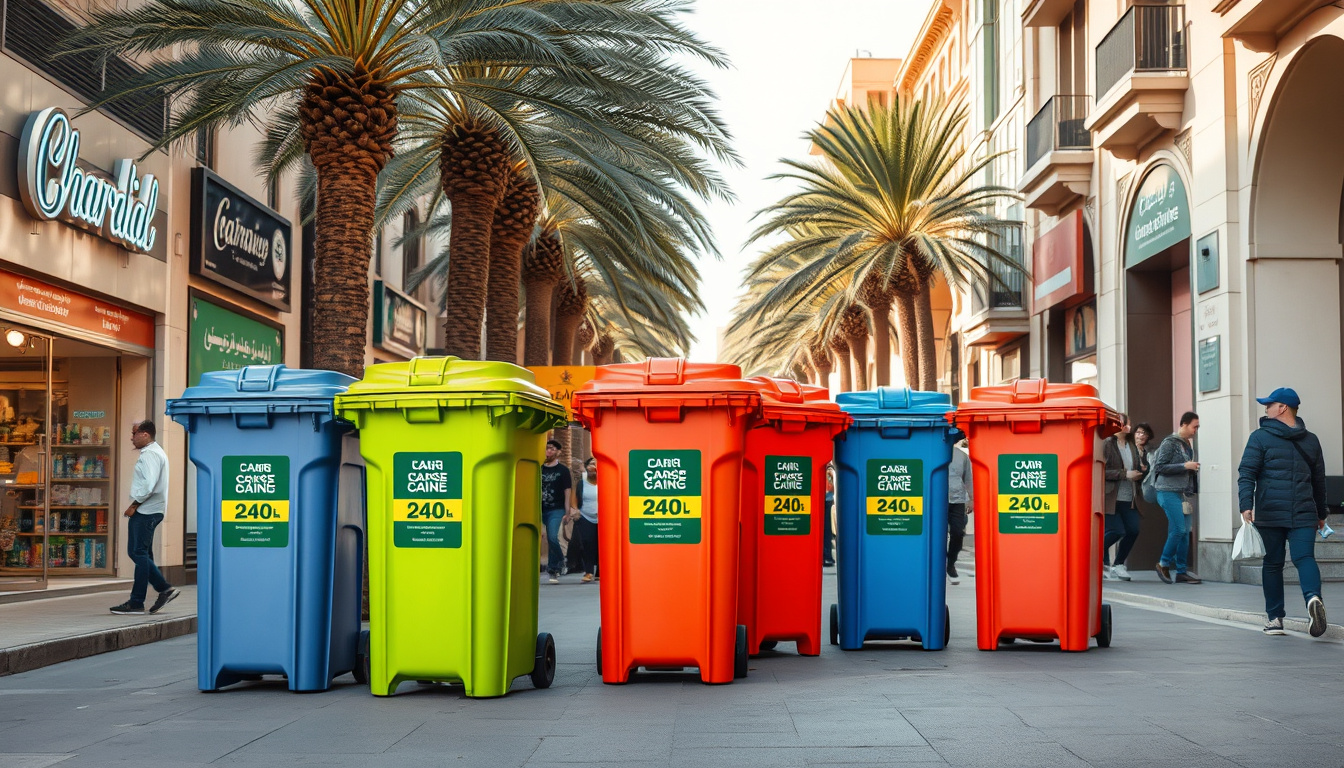
Cairo, a city known for its rich history and vibrant culture, faces a significant challenge with waste management.
In a decisive move to combat litter and improve public health, Cairo’s Governor Ibrahim Saber recently mandated that all shops must install a garbage bin with a minimum capacity of 240 liters in front of their premises.
This directive, issued on December 22, 2022, outlines a clear expectation for shop owners and emphasizes the role of businesses in maintaining the cleanliness and health of the city.
With a two-week compliance window and strict penalties for non-compliance, this regulation marks a significant step towards a more organized approach to waste management in one of the largest cities in the Arab world.

Key Takeaways
- Cairo mandates all shops to install 240L trash bins to improve waste management.
- Shop owners face legal penalties, including fines up to EGP 5,000, for non-compliance.
- The initiative aims to reduce street litter and enhance public health in the city.
Overview of the New Regulation
In a significant move to improve waste management and public health, Cairo’s Governor Ibrahim Saber has issued a new regulation requiring all shops within the city to install garbage bins with a minimum capacity of 240 liters outside their establishments.
This decision, which came into effect on December 22, grants shop owners a two-week grace period to comply, after which non-compliance could lead to legal repercussions, including hefty fines of up to EGP 5,000 (about USD
105.2), as part of the Public Shops Law No.
154 of
2019.
The regulation stems from a pressing need to curb the rampant issue of waste improperly disposed in the streets, a situation that poses serious public health risks and tarnishes the aesthetic appeal of the city.
Recent inspections indicated that a staggering proportion of shop owners lack adequate waste disposal facilities, playing a significant role in the city’s litter problems.
Alarmingly, waste management official Ahmed Khaial noted that 40% of Cairo’s solid waste ends up in streets or illegal dumps, while approximately 30% of waste goes uncollected altogether.
This initiative not only underscores the local authorities’ commitment to enhancing the sanitation infrastructure but also aims to instill a sense of accountability among businesses regarding their waste management practices.
Implications for Businesses and Public Health
The implications of this mandate extend beyond mere compliance; they signal a shift in the responsibility businesses hold towards environmental stewardship and public health.
By enacting this regulation, Cairo’s government is not only prioritizing public cleanliness but also aiming to foster a culture of sustainability within the business sector.
Shop owners are now incentivized to actively engage in waste management strategies, which may include collaborating with waste disposal services to ensure proper waste segregation and collection.
Such measures can lead to increased customer satisfaction and loyalty, as communities become more invested in maintaining clean spaces.
Furthermore, this imperative aligns with global trends in corporate social responsibility, where businesses increasingly recognize the importance of contributing positively to their environments.
Failure to meet the requirements could result in financial penalties, but it also poses reputational risks for businesses that may be viewed as neglecting their civic duties.
Ultimately, Cairo’s initiative sets a precedent for other cities, highlighting the interconnection between effective waste management, public health, and community engagement.