
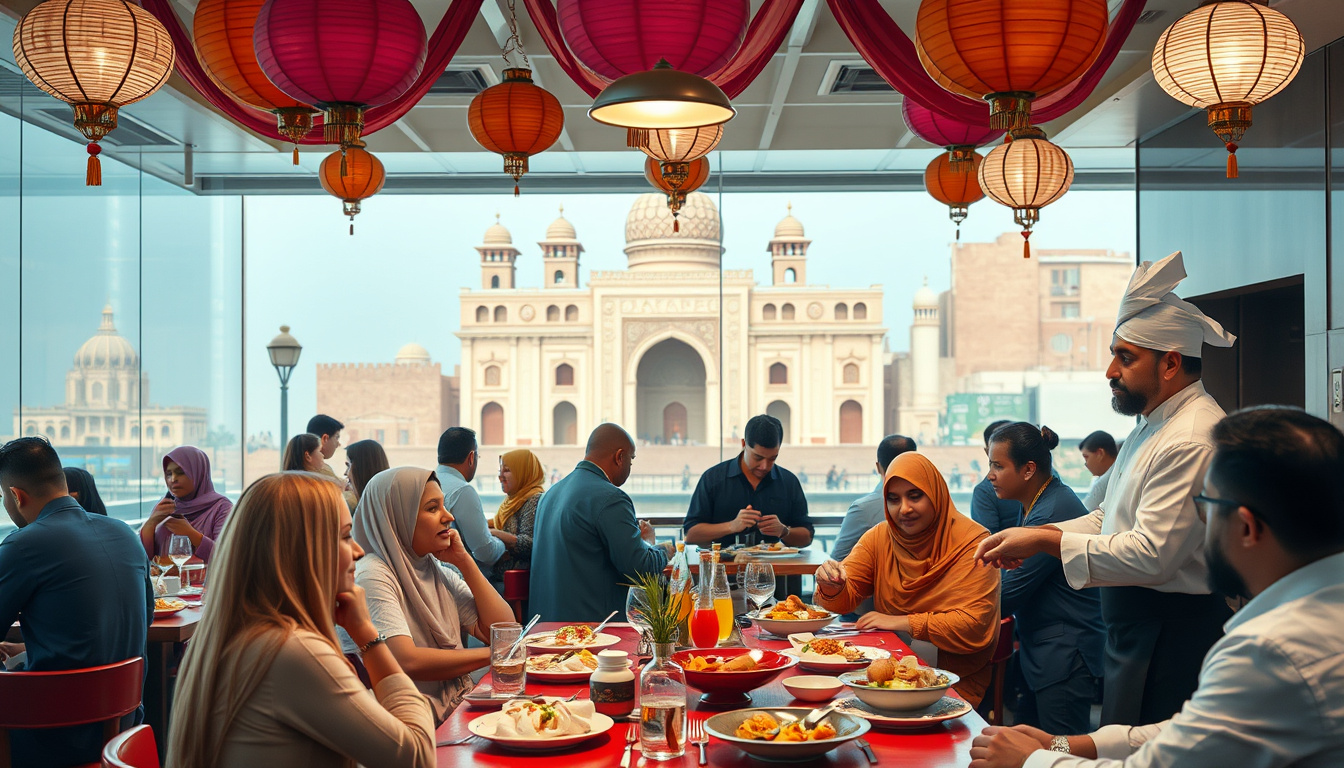
The bustling restaurant industry in Egypt offers both exciting opportunities and formidable challenges.
With a disheartening 60% of establishments failing in their first year, the stakes are high for aspiring restaurateurs.
Expert Amr Mostafa, a seasoned hospitality consultant, delves into the critical factors that contribute to success in this competitive landscape.
From the importance of thorough feasibility studies to understanding the dynamics of location, financing, and market demands, Mostafa provides invaluable insights for those looking to thrive in Egypt’s vibrant food sector.
Explore the complexities of launching and sustaining a successful restaurant, and learn from the experiences of local brands that have mastered the art of dining in Egypt.

Key Takeaways
- Understanding thorough feasibility studies is essential for restaurant success in Egypt.
- Location significantly impacts restaurant performance, accounting for 60% of success.
- Successful restaurant owners focus on market needs and avoid common pitfalls like poor financial management.
The Importance of Feasibility Studies and Financial Planning
The importance of feasibility studies and financial planning in the restaurant industry cannot be overstated, especially in challenging markets like Egypt where a staggering 60% of establishments fail within their first year.
This significant turnover is often due to intense competition, thin profit margins, and a surprising lack of meticulous preparation.
Amr Mostafa, a seasoned hospitality consultant, emphasizes that thorough feasibility studies and sound financial planning are essential prerequisites for launching a successful restaurant.
According to him, the location of a restaurant is paramount, with approximately 60% of a restaurant’s success hinging on its site selection alone, while operational efficiency and effective marketing contribute another 20% each to the success equation.
Many new restaurant owners often misjudge their potential for success due to poor location choices, frequently placing their establishments in areas with exorbitant rent and a high saturation of competitors.
Mostafa warns that inadequate planning can lead to critical oversights, such as failing to identify target markets and crafting appropriate pricing strategies, which can ultimately result in operational failures and diminished customer demand.
Furthermore, poor financial management practices and the temptation to chase fleeting trends that can dilute the restaurant’s core identity are common pitfalls that new entrants must avoid.
Despite the high failure rate, there are shining examples of success within the Egyptian market.
Local brands such as Desoky and Soda have thrived by thoroughly understanding their customer base and continuously adapting to meet their needs.
Mostafa emphasizes that the most successful dining ventures in Egypt result from a combination of ambition and diligent preparation, arguing that running a restaurant should hinge on scientific methods rather than mere haphazard gambling.
Lessons from Successful Local Brands in Egypt’s Restaurant Scene
To illustrate the power of strategic planning, it’s essential to examine how some successful local brands have navigated these challenges.
Take Desoky, for instance.
With a focus on providing authentically Egyptian cuisine, Desoky has carved a niche by staying true to its cultural roots while also incorporating modern dining trends.
Their ability to pivot and offer delivery services during the pandemic showcased their adaptability to changing consumer demands.
Similarly, Soda has managed to create a unique brand identity by harnessing social media for marketing, which allows them to maintain a closer connection to their customers and gain valuable feedback.
Both brands exemplify the importance of understanding market dynamics and the necessity of aligning business tactics with customer preferences, ultimately demonstrating that persistence and strategic foresight can lead to lasting success in Egypt’s competitive restaurant landscape.