
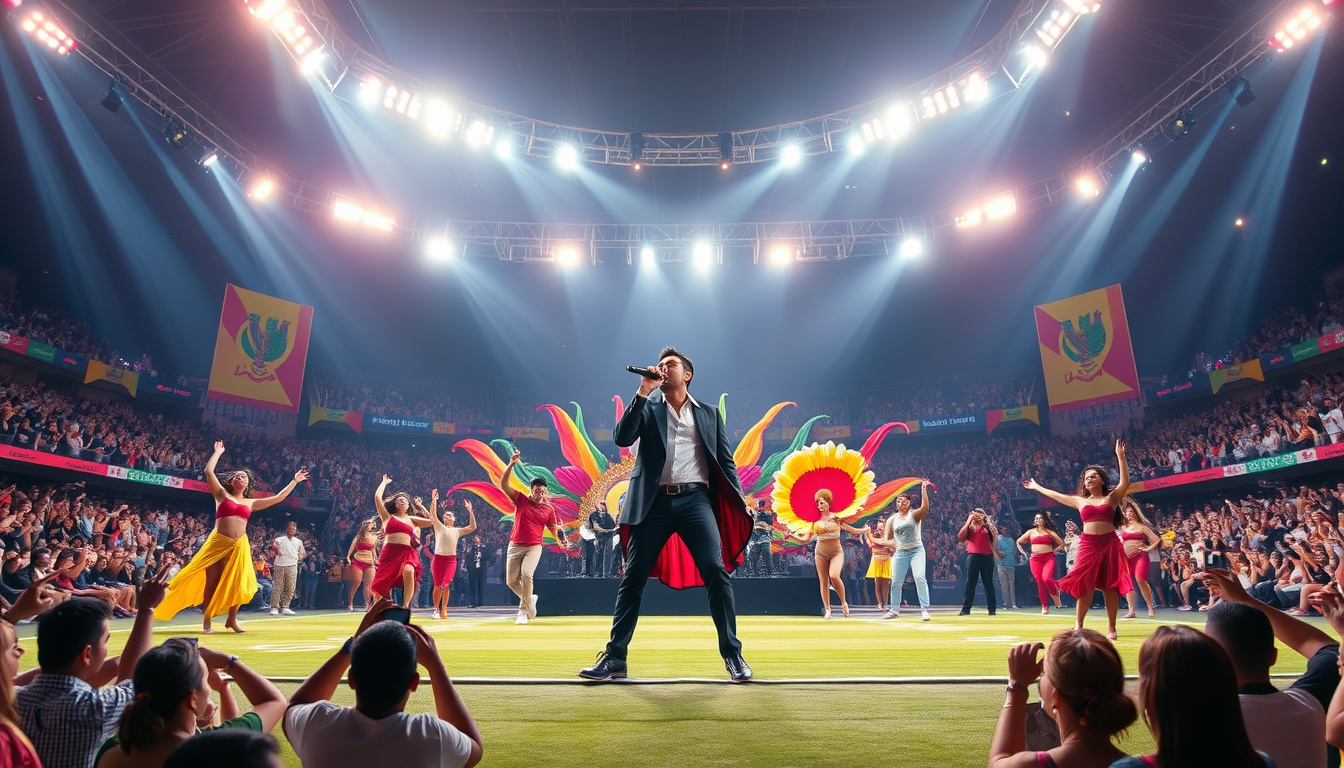
Bad Bunny’s electrifying performance at the Super Bowl LX halftime show was more than just a musical spectacle; it was a powerful statement against the rising tide of xenophobia and anti-immigrant sentiment in the United States.
With a blend of vibrant visuals, pulsating rhythms, and heartfelt messages, Bad Bunny showcased the richness of Latin culture while standing as a beacon of hope and resilience.
One of the standout moments of the performance featured a young actor, Lincoln Fox Ramadan, whose poignant representation of youth and dreams resonated widely, particularly within immigrant communities.
As a 5-year-old of Egyptian and Argentinian descent, Lincoln’s role not only highlighted Bad Bunny’s early aspirations but also reflected the artist’s own journey in embracing his Puerto Rican identity.
Together, they symbolize an important shift in America’s cultural landscape—one that celebrates diversity and promotes visibility for all.

Key Takeaways
- Bad Bunny’s Super Bowl LX halftime show serves as a powerful statement against xenophobia and celebrates cultural diversity.
- The inclusion of young actor Lincoln Fox Ramadan highlights the importance of representation for immigrant communities.
- Bad Bunny’s embrace of his Puerto Rican identity inspires audiences and illustrates a shift in America’s cultural narrative.
The Significance of Bad Bunny’s Performance in Challenging Xenophobia
Bad Bunny’s performance during the Super Bowl LX halftime show has emerged as a powerful statement against rising xenophobia and anti-immigrant sentiments in the United States, showcasing not just his artistry but also the key role of culture in fostering inclusivity.
Cultural experts have lauded this landmark event, marking it as a turning point in America’s cultural narrative.
A particularly memorable moment came when Lincoln Fox Ramadan, a 5-year-old actor of Egyptian and Argentinian descent, took the stage to receive a Grammy trophy from Bad Bunny.
This poignant scene resonated deeply, illustrating a young Bad Bunny as he reminisces on his journey from humble beginnings to global stardom, all while watching his past on a vintage TV.
The inclusion of Lincoln, who represents a blend of diverse heritages, ignited a wave of pride in Egypt, highlighting the importance of representation on such a vast platform.
Following the event, Lincoln’s family shared their gratitude on Instagram, emphasizing how this experience not only inspired dreams but also celebrated cultural visibility, especially vital for immigrants.
Bad Bunny’s own narrative as a Puerto Rican artist who embraces his roots serves as a beacon of hope, inspiring individuals from all backgrounds to dream and strive for success, thereby challenging stereotypes and promoting acceptance.
Cultural Representation: Lincoln Fox Ramadan’s Role in the Show
Lincoln Fox Ramadan’s role in Bad Bunny’s Super Bowl LX halftime performance highlights the importance of cultural representation in today’s media landscape.
As a young actor, Lincoln embodies the aspirations and journeys of diverse communities, effectively bridging the gap between cultures.
His portrayal of a youthful Bad Bunny receiving a Grammy trophy symbolizes not just personal achievement but also the dreams of many young immigrants and children of immigrants who see themselves reflected in his story.
The blending of his Egyptian and Argentinian heritage brings to the forefront the beauty of multicultural identities and the significance of visibility in mainstream entertainment.
This moment wasn’t just a fleeting performance; it was a celebration of resilience and hope, signaling that dreams are attainable regardless of one’s background.
Lincoln’s appearance, alongside Bad Bunny, reverberates across various demographics, encouraging a new generation to pursue their passions with fervor, and reinforcing the necessity for diverse voices in entertainment.